

Twenty-thousand Miles in a Flying Boat: My Flight Round Africa – Sir Alan J Cobham 
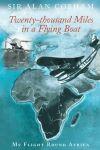 This is a real ‘boy’s own adventure’ tale from the inter war years. It’s Sir Alan Cobham’s first-hand account of his pioneering journey (accompanied by his wife) across Africa in 1929, seeking out routes and landing sites for future imperial air travel. Their incident-rich flights took them from Rochester, across France and the Mediterranean to Egypt. Then through East Africa and around much of the African coast to the Ivory Coast and canaries, before returning to England. Invariably, along the way, they were rescued, hosted and/or entertained by the local gentry or military. Sir Alan’s book was originally published in 1930. My copy is the 1932 re-print with 46 B/W photographs from the trip. This new paperback edition is illustrated with over 50 photographs, the additional unpublished images coming from the family archive.
The Milk Cows: The U-Boat Tankers at War 1941-1945 – John F. White
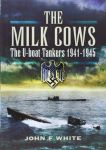 A really interesting and detailed history of the U-boat campaign and the role of the U-tankers, which, though few in number, were crucial for supporting the U-boats operating in distant waters (South Africa, Caribbean, South America, US East Coast). At the start of WW2 the Kriegsmarine used surface ships to support their commerce raiders, but quickly saw the need for U-tankers (“Milch Cows”), which were less vulnerable to interception. A U-tanker would carry spare torpedoes, food, ammunition, spare parts, and had a machine shop for repairs and a doctor onboard. Most importantly they carried lubrication oil and 432 tons of fuel oil. Since 50 tons would enable a Type VII U-boat to operate as far as Latin America, and just 90 tons could enable a Type IXC boat to patrol off Cape Town, the U-tankers were highly significant for both sides… which is why the history of their use is so busy.
Japanese Destroyer Captain – Capt. Tameichi Hara
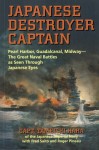 I’ve been looking forward to reading this, and it didn’t disappoint, Capt. Hara takes us through his career in the Imperial Japanese Navy from his rather brutal naval college days, to his command of a rapidly diminishing destroyer squadron, and finally, the sinking of his light cruiser alongside the battleship Yamato on their suicide mission in April 1945.
Surprises: I didn’t know just how good the 175 IJN destroyers were at the start of the Pacific War, and how their oxygen-powered torpedoes seriously outclassed the Allies (They could take a 500kg warhead up to a max range of 40,000m faster than the American 300kg/8,000m or British 320kg/10,000m torpedoes), and, we’re fed this idea that Admiral Yamamoto was a reluctant master strategist and Nagumo was a hapless fleet commander, whereas Hara sees them the other way around. Interesting.
Wings on my Sleeve – Capt Eric ‘Winkle’ Brown
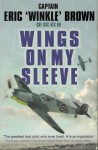 This illustrated autobiography tells the extraordinary career of Royal Navy Fleet Air Arm pilot Eric ‘Winkle’ Brown, widely considered to be the best test pilot ever, ever, ever! Between 1939 and 1970, he flew 487 different aircraft types and most of their variants (British, Russian, German, American, Italian, props & jets… even the notoriously skittish German Me 163 rocket/glider!) – more than any other pilot.
He also made 2,407 carrier landings. How many flights can you get in a log book, because he must have had a bookcase of them!