 By
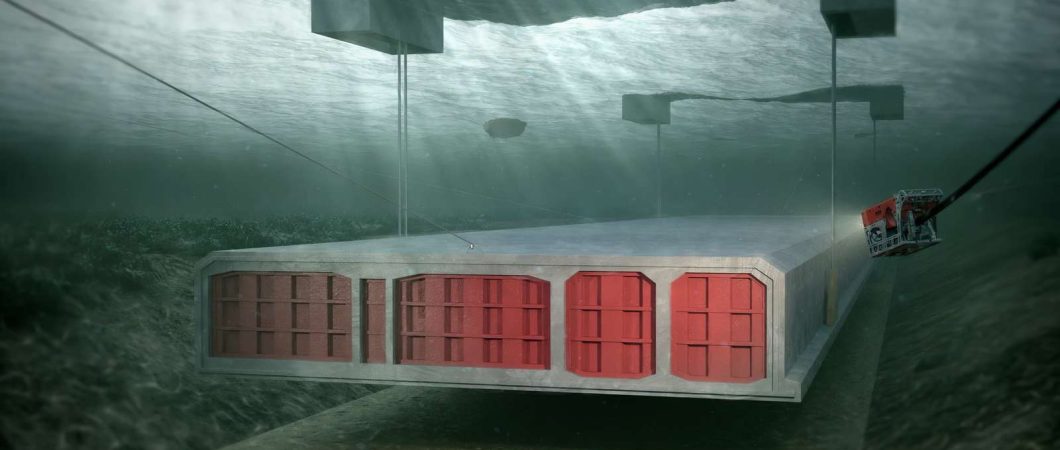
By The Fehmarnbelt Tunnel is a major European civil engineering project to lay an 18 km (11.2 mile) road and rail tunnel under the Baltic Sea between Germany and Denmark. (See The Fehmarnbelt Tunnel for overview.)
Earlier this week, the first of its 89 pre-fabricated concrete tunnel sections was floated out of the harbour at Rødbyhavn in Denmark and carefully lowered into the deep trough that has been dug across the strait to Germany.
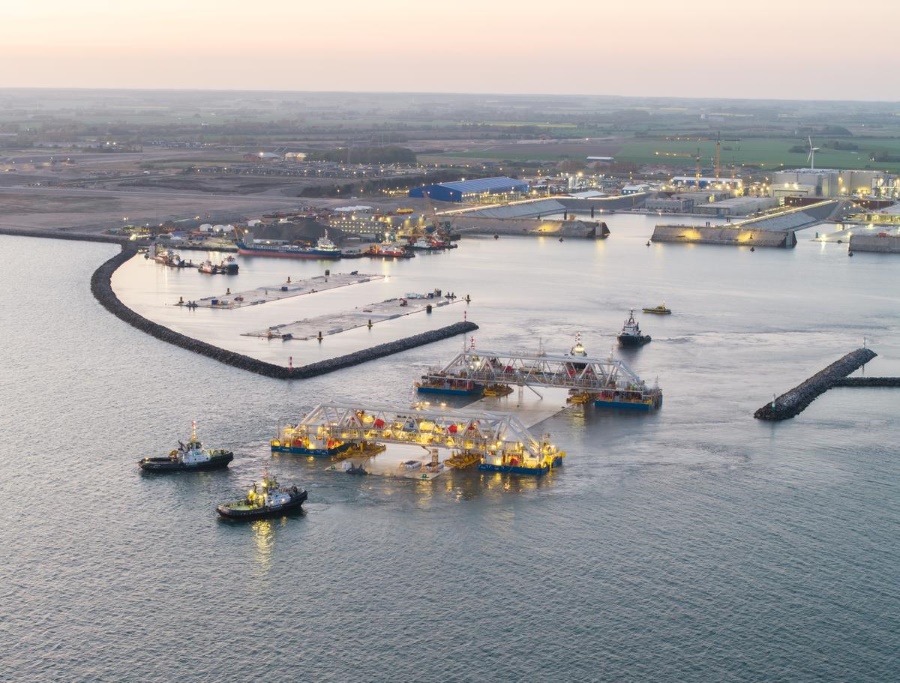
The operation began late on Monday evening, 4 May 2026. Five tugboats and the special immersion vessel IVY* transported the tunnel element from the harbour basin in front of the tunnel section factory to its assigned location in front of the Danish tunnel entrance (“portal”), which has already been dug.
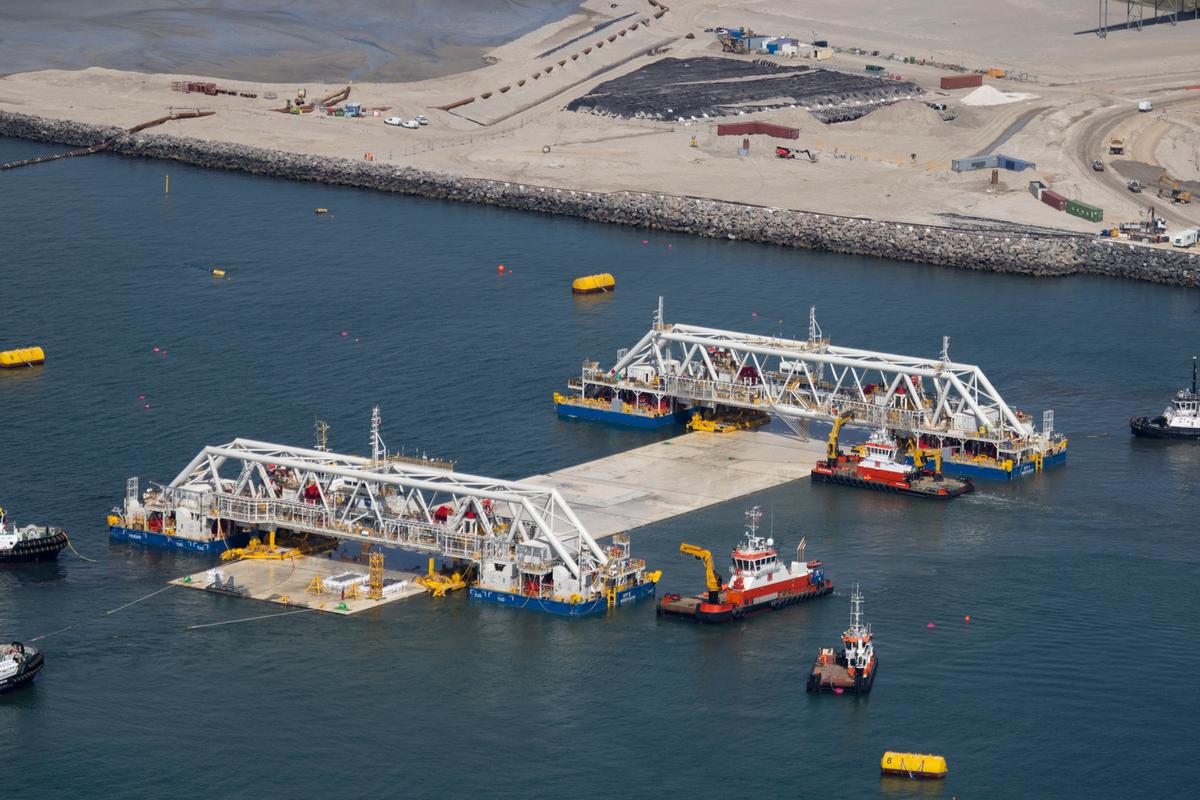
Around noon on Wednesday, the immersion began and the section was slowly lowered over 14 hours. Once in place, it was connected to the portal using hydraulic arms. Its position – is it flat? Is one end higher/lower than the other? – was then finally confirmed by precise laser measurements inside the immersed tunnel element, before releasing IVY. Then, another special vessel, dropped large quantities of gravel along the sides of the section to ensure it remains in position.
Now for the first time they are actually building the tunnel.This is a major step forward for the project. Since 2020 everything has been preparatory work; building the harbours, building the concrete factory to build the tunnel sections, digging the trench, building the road & railway connections and the portals, designing & building the special craft (IVY) to float out & lower the sections, etc. Now for the first time they are actually building the tunnel.
One down. Eighty-eight to go!
How fast they can drop the sections will now depend on wind & tide.
UPDATE (02/08/2026): Things are going well. They immersed the third tunnel section on 31st July, and are now preparing the fourth.
* IVY is actually two vessels IVY 1 and IVY 2. They were certified to operate by the Danish Maritime Authority at the beginning of April. Together, they are equipped with 23 kilometres of steel wire spread over 66 winches, enabling them to submerge tunnel elements to depths of up to 40 metres with millimetre precision.