 By
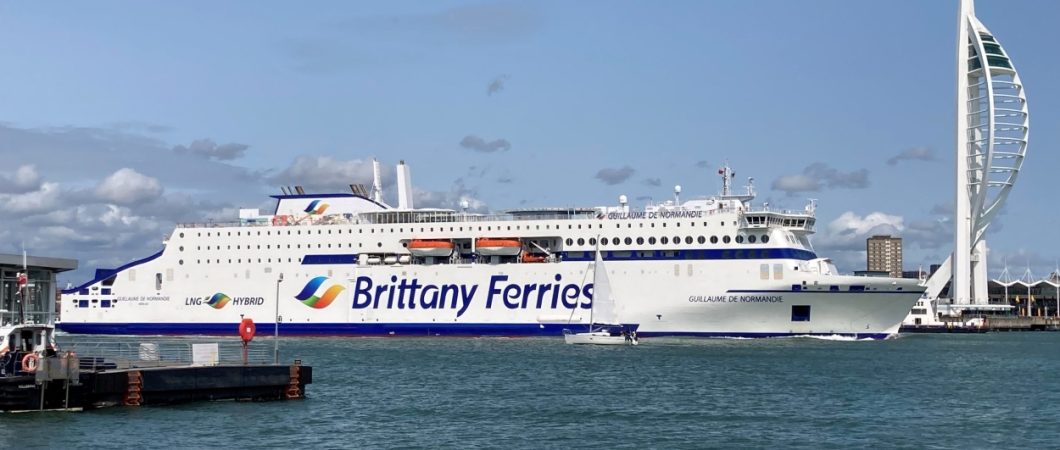
By Almost one year ago, Brittany Ferries introduced their new flagship ‘Guillaume de Normandie‘, intended to replace the old ‘Normandie‘ on their Portsmouth – Caen/Ouistreham* route. Like her sister ship, Saint-Malo (SM), which began operating Portsmouth – St Malo two months earlier, the Guillaume de Normandie (GdN) is not a simple replacement, she’s a Chinese-built new-generation Liquefied Natural Gas (LNG)/Electric hybrid powered ship, designed to benefit the company’s bottom line, the environment, the local communities, and the passenger experience.
I sailed on her last year, and being fascinated by marine engineering and technology, was keen to see how she performed.
How do these new ships help Brittany Ferries?
Guillaume de Normandie and Saint Malo fit into the company’s green and efficient aspirations. They’ve been planning for some time a fleet-replacement programme that not only reduces their carbon footprint but also their operational costs through better fuel efficiency, so that they can compete better in the ferry market. At the heart of the new ships’ efficiency is an LNG-electric hybrid drivetrain, which integrates advanced Wärtsilä** dual-fuel engines with a massive 12 MWh battery package — the largest ever built for marine vessels.
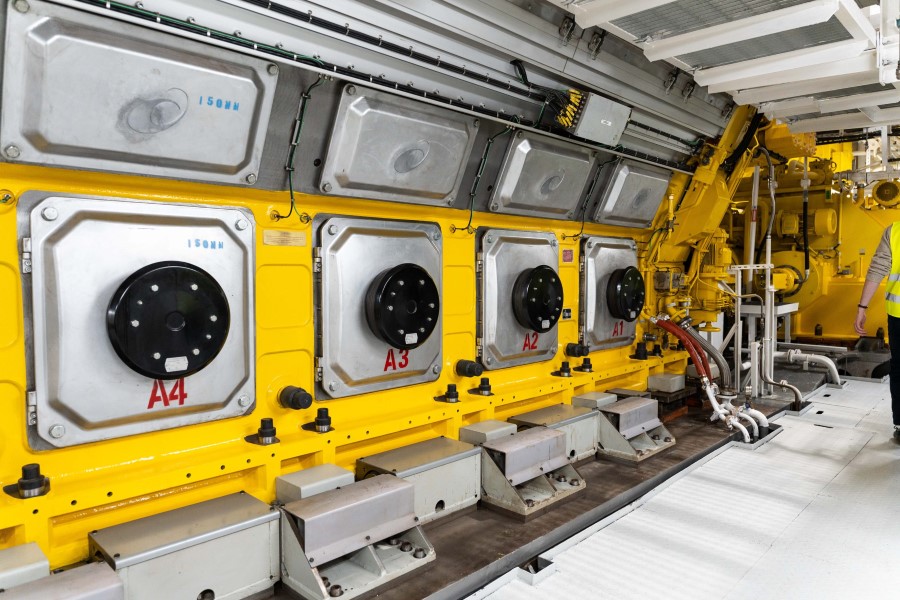
These engines are amazing. They can provide over 30 megawatts of power, switching seamlessly between LNG and Marine Diesel Oil. They can also adapt to future regulations by running on biogas or biodiesel as they become more viable. But what makes these ships operationally efficient is the hybrid architecture. Using Wärtsilä’s energy management system, the ships can “peak shave”. The batteries absorb any sudden power demands, allowing engines to simply plod along at stable, optimal loads. It doesn’t sound like a ‘biggie’ but this reduces overall fuel consumption by up to 15% compared to conventional vessels.
Local benefits: The “Green Shipping Corridor”
You know that lengthy time you spend with your car in your allotted boarding lane? It’s a chance to find whether that crucial item is either buried in your luggage or left behind at home; to try to work out which stickers to apply to which part of your headlights (impossible BTW. Nobody can!); and to let the kids out to stretch their legs while NOT wandering off “because we might have to suddenly go”!
With all that going on, very few passengers notice the plumes of dirty smoke rising from ferry funnels.
The environmental benefits of Brittany Ferries new ships are significant, particularly for Portsmouth, St. Malo and Ouistreham.
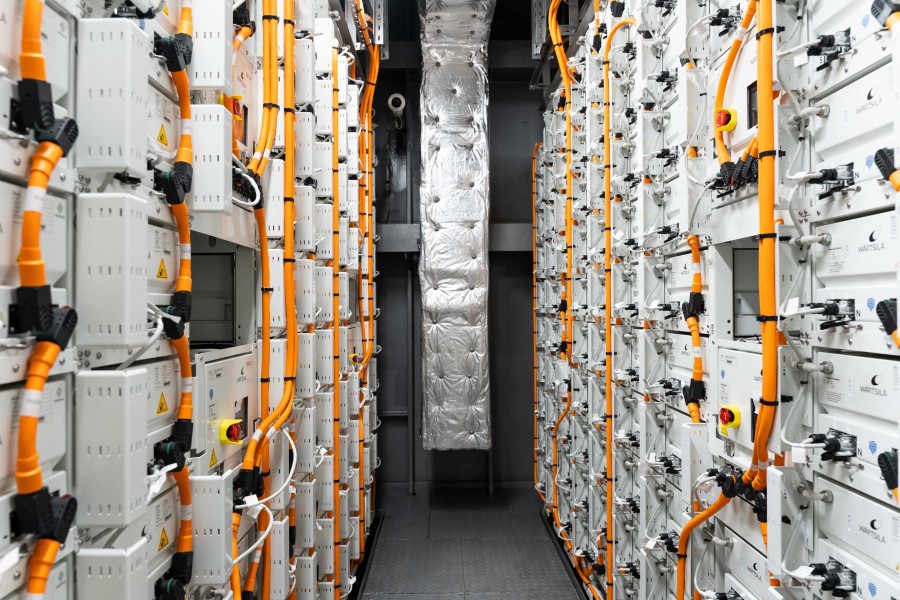
One of the ships’ most innovative features is the “Green Mode,” which allows for completely silent, zero-emission operation while entering, exiting, and manoeuvring in ports on battery power alone. But even better, the development of shore power infrastructure, such as the “Sea Change” project in Portsmouth, and the “Normandy Docks Power” project at Ouistreham, means Guillaume de Normandie can plug into 100% renewable electricity while stationary at the quay.
No more dirty smoke! At least, not from Brittany Ferries’ ships!
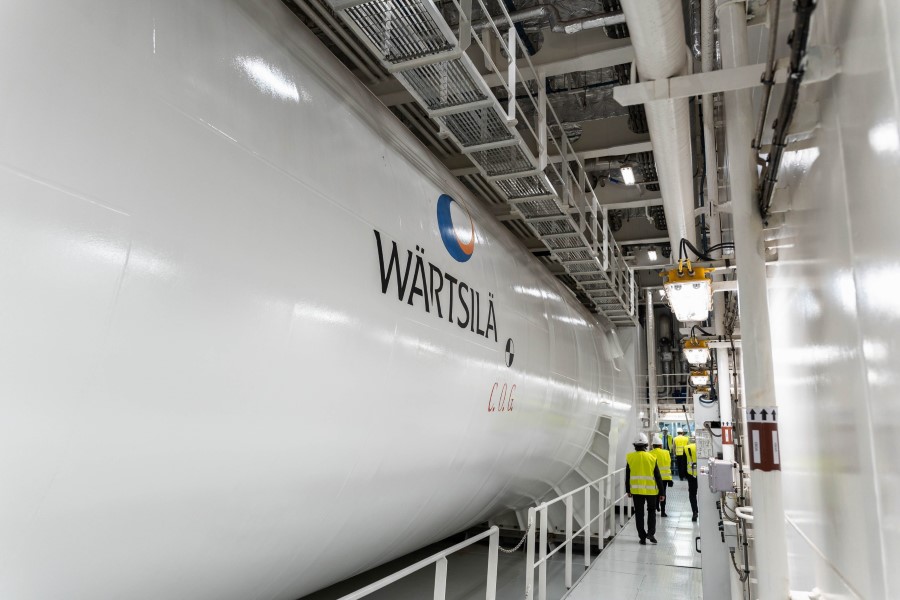
The overall approach creates a “green shipping corridor” that protects local air quality and reduces noise pollution for coastal communities. (Noise pollution may not be a big issue for large ports like St Malo and Portsmouth, but it is significant in a small port like Ouistreham.) Then, by using Liquified Natural Gas (LNG) at sea, between the ports, the vessel achieves significant reductions in sulphur oxides (SOx), nitrogen oxides (NOx), carbon dioxide (CO2), and particulate matter***. When combined with its plug-in battery capability, the ships are estimated to reduce greenhouse gas emissions by approximately 25% compared to their predecessors in the fleet.
What about the passengers?
Well, to be fair, few of the 1,300+ passengers the vessels can carry, will notice any difference at all. Some, especially those eagle-eyed folk who spotted the absence of diesel smoke while queueing on the dockside and tech geeks like me, might notice the silent departure as their ferry glides out of port. And a handful might notice the absence of sooty smoke as they stand on deck out in the Channel. For most, the benefits will be unseen.
What they have noticed on Guillaume de Normandie are shipboard things like the promotion of Normandy through regional art and cuisine. They’ll maybe notice there are now pet-friendly and allergy-friendly cabins and new “Couchette Plus” lounges offering quiet lie-back loungers, ship-wide Video-on-Demand, an outdoor gym, and a shop featuring regional delicatessen products. But they won’t think about what goes on down below in the engine room!
But never mind all that! Listen to that silent departure! It got me wondering. Many/most electric cars have a digital sound, otherwise there’d be too many accidents with pedestrians. Ships don’t have that problem, but it would be fun to imagine what digital sound Brittany Ferries’ creative sound engineers might come up with for their electric ships, or “ghost ships” as the locals in Portsmouth allegedly call them.
* Caen is the major city, but it’s 11 km inland. The ship docks at Ouistreham on the east end of Sword Beach. The Portsmouth – Caen route is Brittany Ferries’ most popular, carrying 40% of all passengers.
** Finnish company that manufactures and services power sources and other equipment in the marine and energy markets.
*** Reduction (LNG vs. Heavy Fuel Oil): Sulphur Oxides 98-99%, Nitrogen Oxides 85-90%, Carbon Dioxide 11%, Particulate Matter is effectively eliminated.