 By
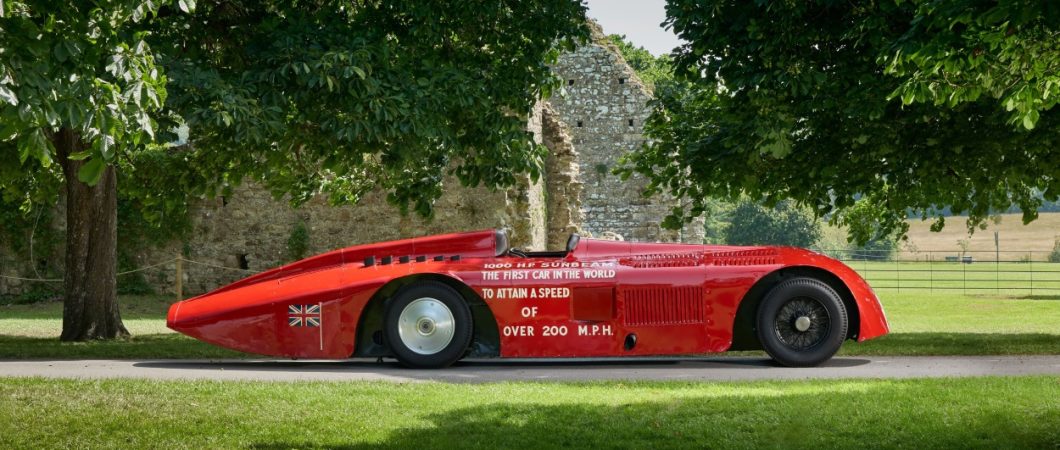
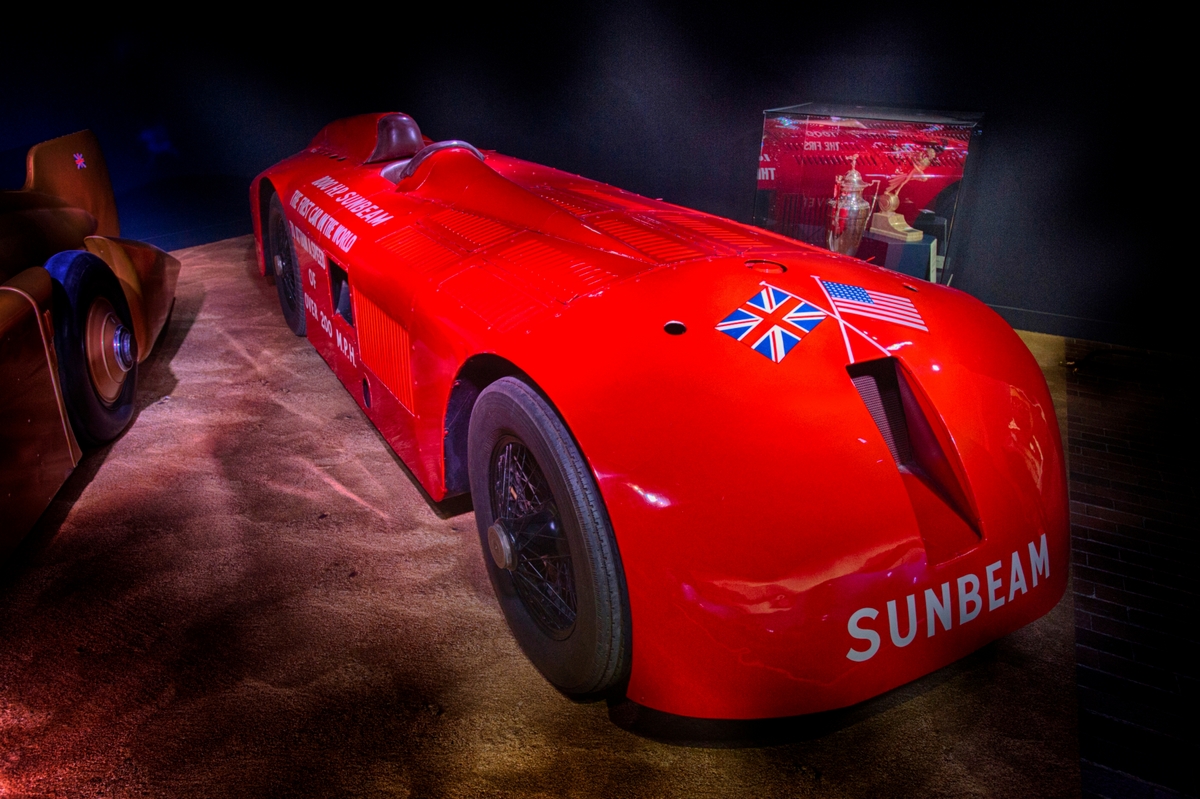
By National Motor Museum engineers have successfully restored the World Land Speed Record breaker Sunbeam 1000hp car, in time for its planned 100th anniversary run at Daytona Beach in the USA next year.
The restoration project has taken over three years, with many additional years of preparatory work. It has tested the Museum’s workshop team, led by Senior Engineer Ian Stanfield, to the limit. Not least because almost every component in the car was bespoke and there were no manuals or documentation to help.
The Sunbeam’s two (yes, two!) colossal 22.5 litre Matabele V12 aero engines, which each produced 435bhp, had not run since before World War II after corrosion attacked internal workings. The last outing was a demonstration circuit at Brooklands, running at slow speed on only one engine. With painstaking rebuilding, using specialist knowledge and bespoke parts, National Motor Museum engineers worked to restore the 4-ton, chain-driven automobile to its full-throated, twin-engine glory.
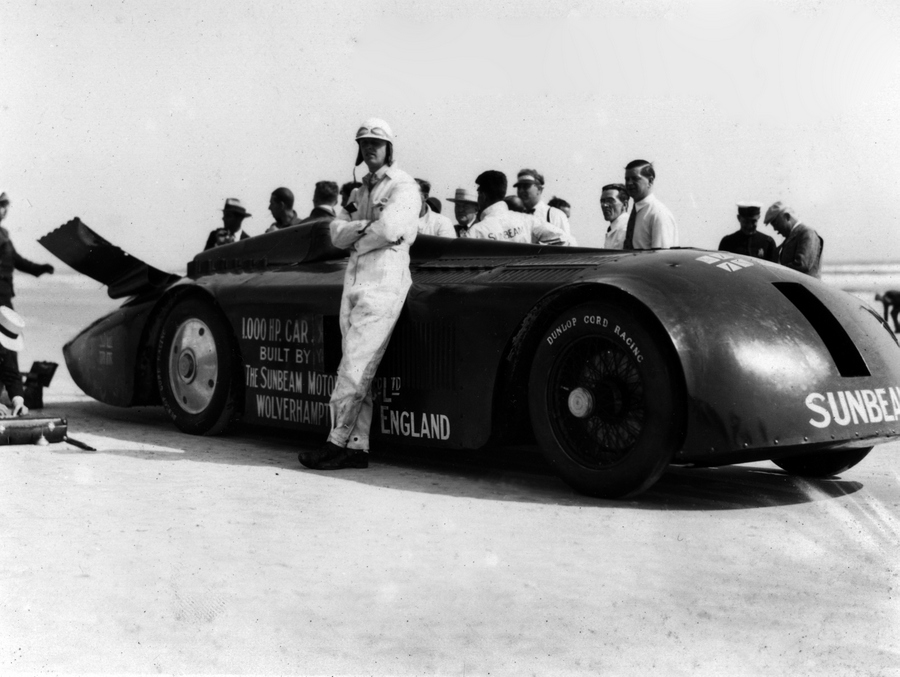
Designed by Captain Jack Irving and built by the Sunbeam car company in Wolverhampton solely to break the 200mph barrier, this immensely powerful machine was driven by Major Henry Segrave to become the fastest car in the world at 203.8 mph (205.6 mph according to the long version of the historic film footage).
After a year-and-a-half of work to strip down and take apart the rear engine, the engineers began its rebuild.
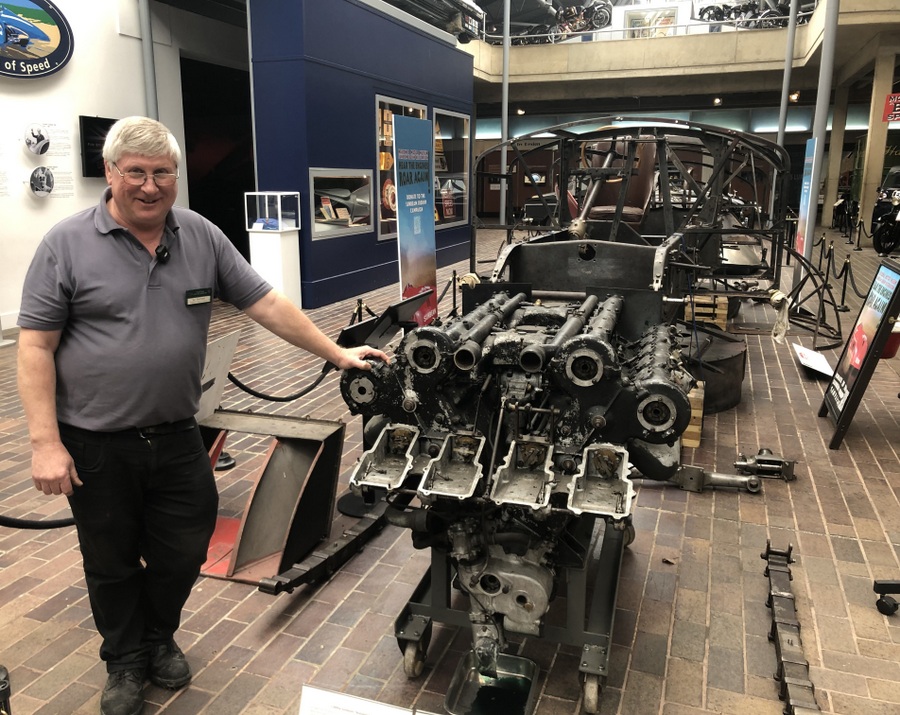
New bespoke engine parts had to be fabricated, while others were re-metalled. Piston rings had disintegrated and needed replacements, while original con rods, pistons and cranks were restored and bolted back together.
The process had to be forensic, as bolts and parts were systematically removed, then meticulously labelled and bagged ready for the rebuild. With no manual or documentation to follow, the team relied on rare pictures they were able to find from the original design team and factory workforce.
National Motor Museum Senior Engineer Ian Stanfield said: “We have found unique engineering and a wonderful quality of workmanship during the restoration – but nothing has been easy to get at.”
Repairing cracks and replacing missing parts
Cracks in the rear engine’s crankcase were found during testing and those were repaired using laser welding.
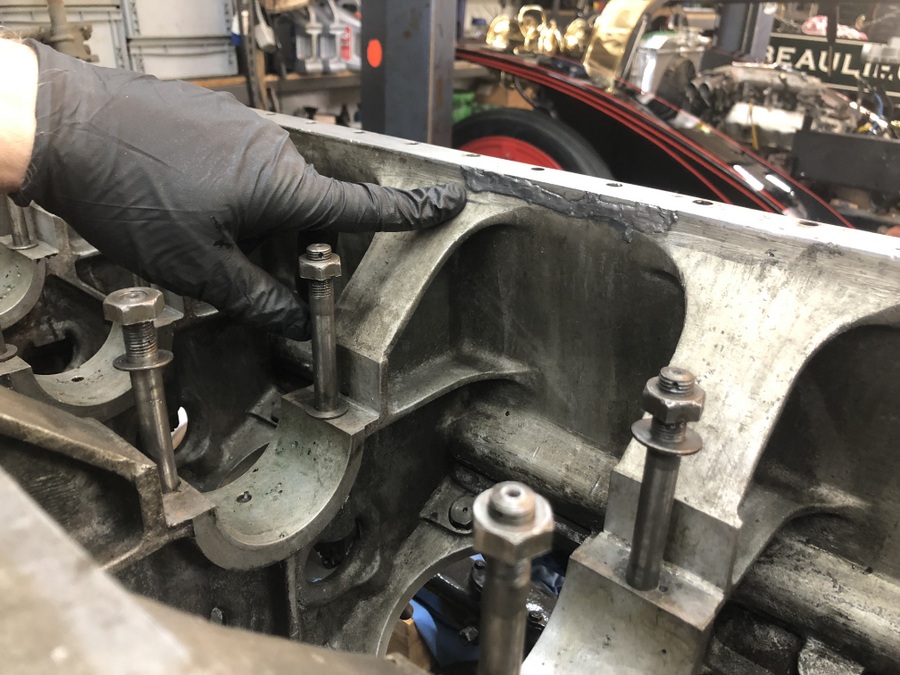
Fortunately, the team had a card up their sleeve in the form of another record-breaking Sunbeam in the museum’s collection, the 150mph Sunbeam 350hp.
The restoration of Sunbeam 350hp in preparation for its 90th Land Speed Record anniversary at Pendine back in 2015, gave the engineers some useful experience.
Ian explained: “After completing Sunbeam 350hp, we found [similar] problems with Sunbeam 1000hp which we weren’t willing to leave, as the custodians of its future. As oils and lubricants get older, they turn into a tar-like consistency and ‘glue’ engine parts together. That deterioration continues if it is not dealt with.
“It’s been a privilege,” he continued “because not everyone gets to work on a Land Speed Record breaker. Working on Sunbeam 350hp was one of the best things I’d ever done and now this is up there with it because it preserves these landmark cars for future prosperity.”
Each of the massive engines needed a forklift truck to lift them from the chassis. Once exposed, a 1918 datemark was found on the rear engine, while the front engine had a plaque which had been attached before it became part of the National Motor Museum collection, saying: “Engine will not start owing to vital part of mechanism being removed.” It could have been a little more specific!
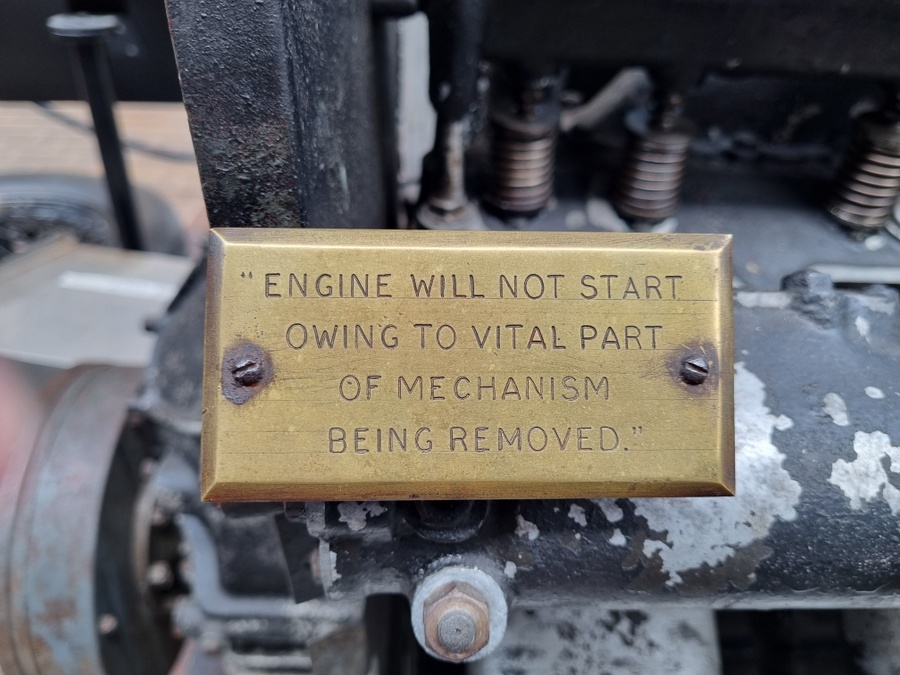
Just as with the rear engine, the workshop team found more problems than expected while dismantling the front engine and extensive work had to be carried out, both on and off-site, to repair the original parts… and source others.
Recent weeks have seen the second engine installed back in the chassis, both engines tested and the original bodywork refitted with few additional components and new tyres added to the iconic car.
The clock has been ticking to complete the restoration so the Sunbeam 1000hp can be shipped at the end of June to the USA from Southampton, to take centre stage at the Pebble Beach Concours d’ Elegance in California in August.
The goal is then to take the vehicle – also known as ‘The Slug’, the slang term for bullet after World War 1 – back to Daytona Beach for a momentous low-speed centenary run on 29 March 2027, to celebrate Sir Henry Segrave breaking the 200mph World Land Speed Record there 100 years ago.
After that the plan has been to take it on tour to motoring museums across America and Europe. Opportunities will also be offered for schools, colleges, and universities to get involved with STEM workshops and activities.
The completion of the project coincidently came on the same week as the fundraising campaign launched by the National Motor Museum Trust to raise funds for the restoration, reached its goal.
The focus of the Museum’s fundraising efforts will now shift to raising funds for the Sunbeam 1000hp to be further displayed in the USA and subsequently back in Great Britain in 2027. The aim is to raise funds to enable the Museum to undertake further restoration projects, and deliver high-quality learning, educational and community initiatives.
(All photos courtesy National Motor Museum)