 By
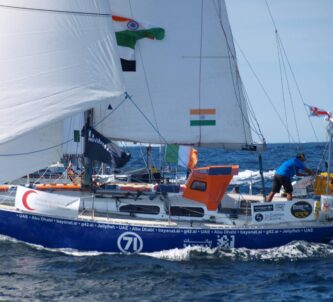
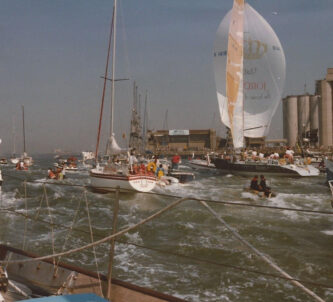
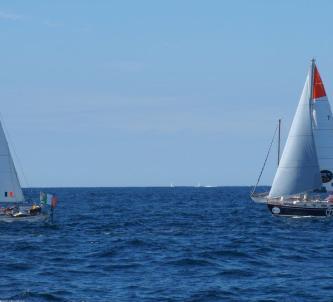
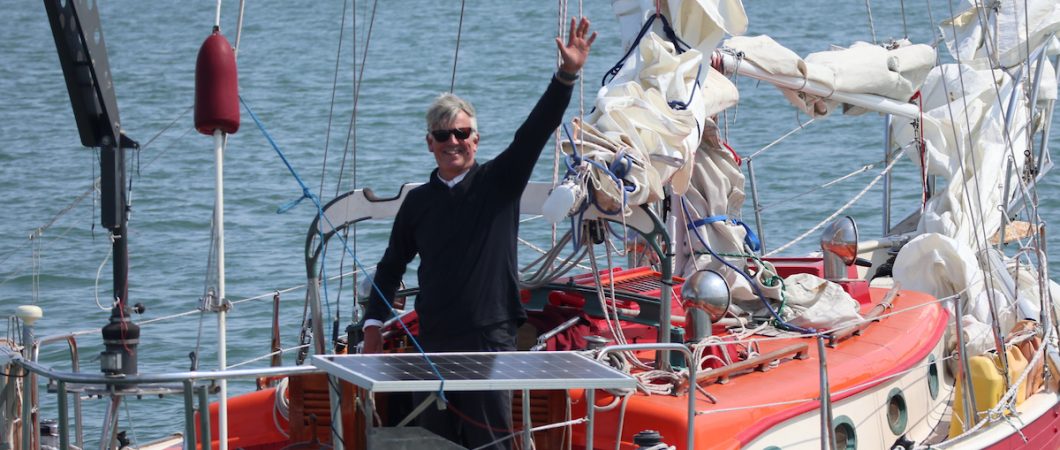
By Every four years, a fleet of solo sailors set off from Les Sables d’Olonne in France to sail their small 36ft yachts, non-stop around the world in the McIntyre Golden Globe Race (GGR), which recreates conditions as they were in 1968. Only this time they’ll have an extra piece of high tech gear on board watching their every move.
This September when the fleet sets off on the 8-month/30,000 mile race, seven* of the 23 competitors will have a specially-designed ‘Live Window’ black box that can broadcast 24/7. This is a huge step forward for race fans.
Last year we were able to follow their progress 24/7 on a live-track chart, but we would have to wait for days & weeks before seeing any video and photos, which would be literally dropped into a fishing basket (to maintain the ‘no contact’ rule) held out by a race committee boat at each of four drop-off points around the world!
The strict technology rules mean that competitors can only receive information using 1968 technology, Eg. Radio Direction Finding or asking a passing ship by HF SSB radio for a weather forecast. They can’t benefit from any outgoing data like their GPS trackers.
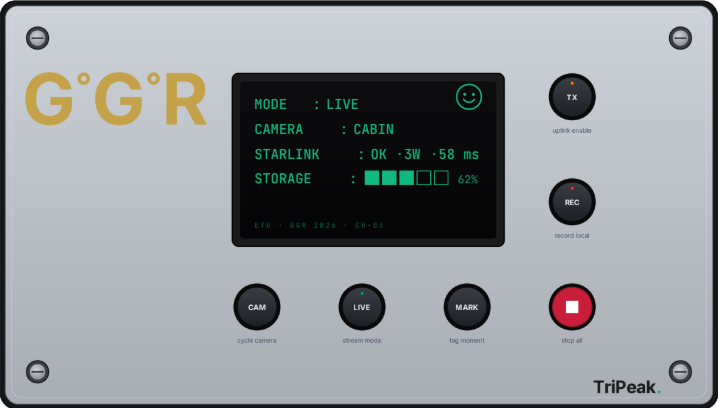
Each participating skipper will be able to go live during a two or three hour time slot by pressing one button, choosing one of three cameras**, and transmitting. The GGR Window also displays skipper heart rate, yacht pitch and roll, apparent wind speed and direction, speed and course over the ground. This information is for the audience and race production only. For the sailors, nothing changes. They cannot see the data being sent, cannot receive information back, and cannot access satellite communications, computers, GPS or modern navigation aids.
Imagine if we had had GGR Window on board Tapio Lehtinen’s boat in 2022 when it suffered a catastrophic failure in the Southern Ocean and sank from under him in minutes. Or on Kirsten Neuschafer’s boat when she rescued him from his liferaft. That would have made dramatic viewing!
* The seven participating skippers are: Ertan Beskardes (UK, 65), Stephen Wraith (USA, 65), Gunnar Christensen (USA, 60), Etienne Messikommer (CH, 38), Louis Kerdelhué (FRA, 21), Helga Marie “Mara” Løvenskiold Kveseth (NOR, 35), and Pär Nyman (SWE, 57).
** The cockpit camera uses infrared night vision, the below-deck camera automatically tracks the skipper, and the mobile camera is gyro-stabilised to keep the horizon level.