 By
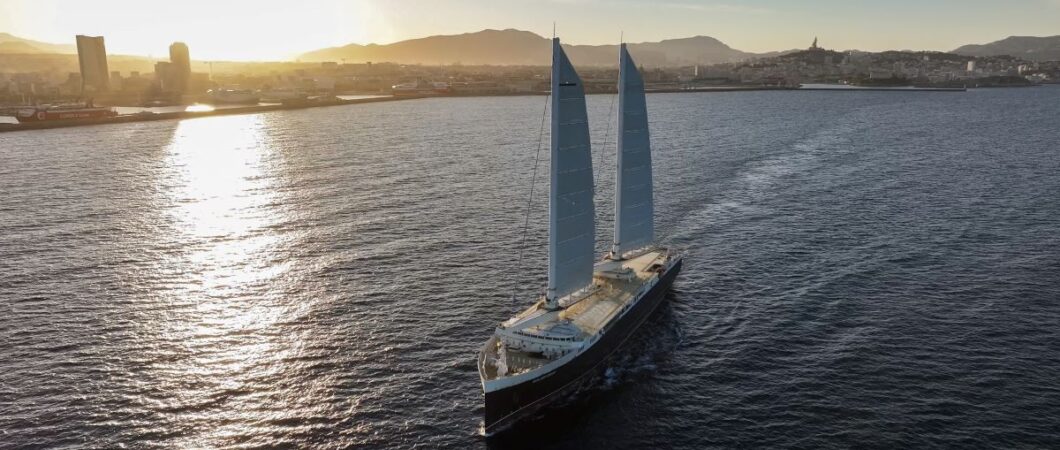
Yesterday, the French shipping company Neoline held a naming ceremony in its registration port of Nantes for its first sail-powered Roll-on Roll-off (RoRo) cargo ship.
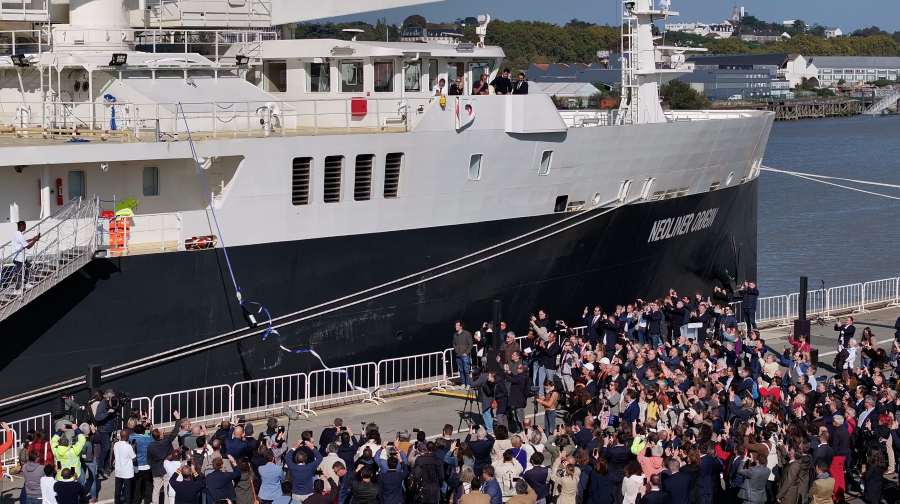
As I write, Neoliner Origin, is heading down the Loire estuary* passing the Chantiers de l’Atlantique shipyard at St. Nazaire where she got her two giant, self-furling, self-adjusting SolidSails that will power her.
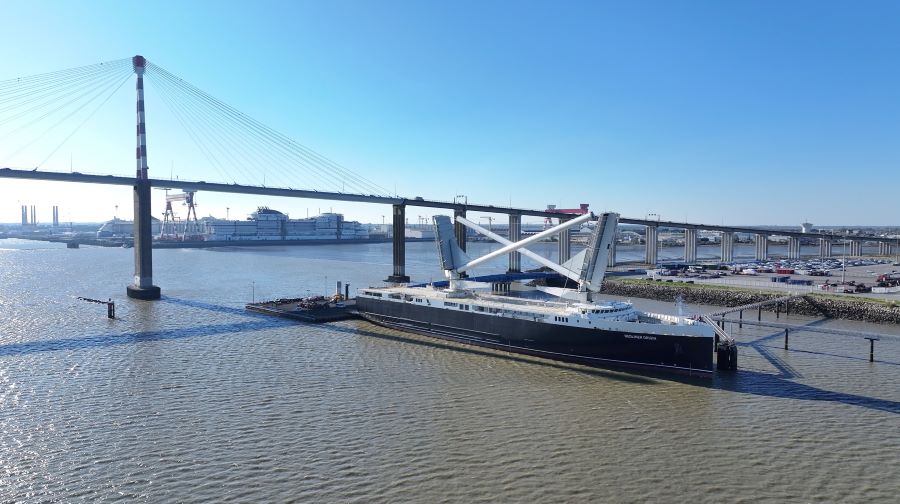
Tomorrow, she sets off across the Atlantic with her first cargo, bound for Saint Pierre and Miquelon and Baltimore.
It’s not her first commercial operation. On her way, earlier this month, from her ship builders in Turkey, she stopped off in Corsica to load 315 new cars and unload them in Marseilles, before setting off for Nantes. She is designed to take rolling cargo (with wheels), shipping containers, oversize freight, or a mixture of all three types.
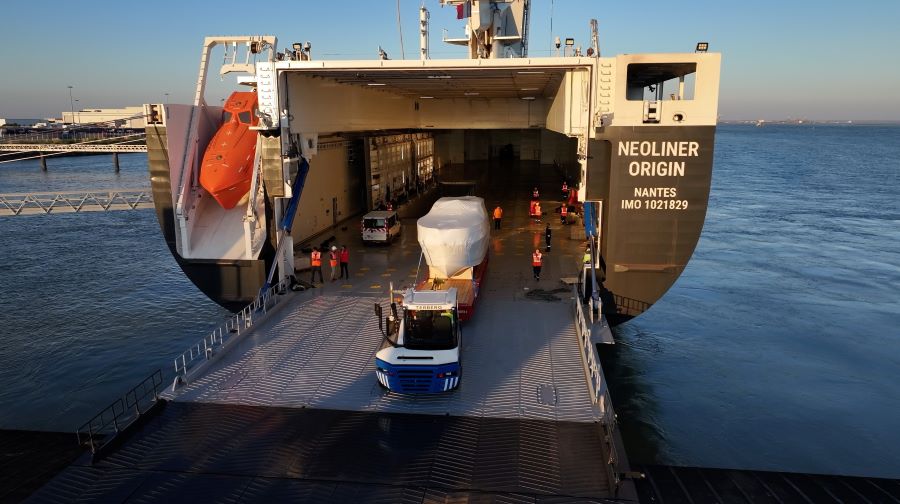
Neoline was established ten years ago, with a firm commitment to reducing carbon emissions at sea. The Neoliner ships (there are more planned) will use the wind as the primary propulsion, supplemented by engine power to meet commercial schedules. In time the engines will be de-carbonised to the point where there are zero carbon emissions.
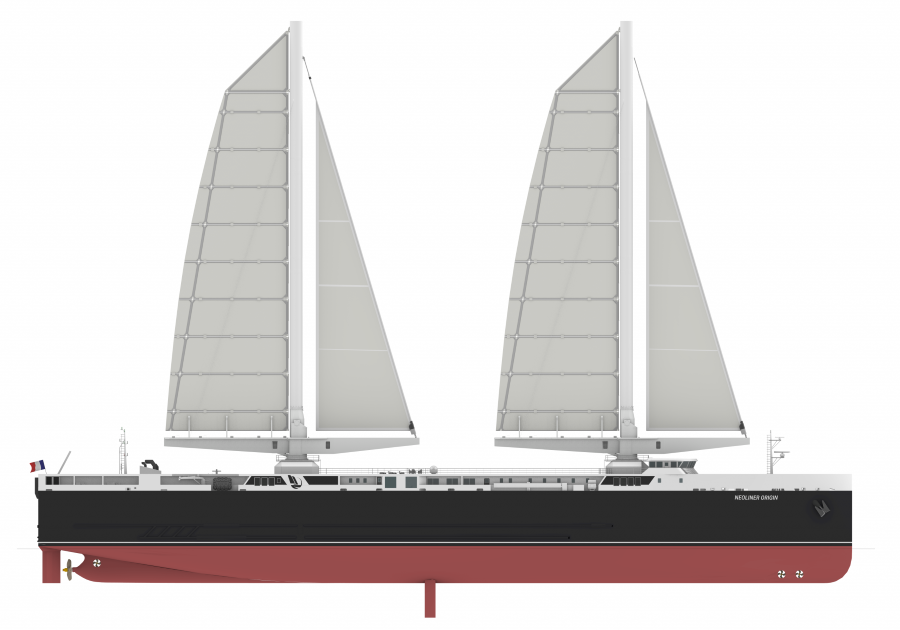
The SolidSail system is fully automated. The sails auto-adjust to the point of sailing, auto-reef for wind conditions, auto-furl, and here’s the clever bit, they tilt down to reduce the height of the ship when it needs to get under bridges or other obstacles. Like most sailing vessels it also has a long keel, which can auto-twist to reduce sideways crabbing under sail, and withdraw into the hull to reduce the draught in shallow waters.
What market is Neoline serving? Neoline says it already has commitments from some major French brands such as Bénéteau, Renault group, Hennessy, Manitou, Clarins, Remy Cointreau, La Fournée Dorée, who want to address their corporate social responsibilities (CSR).
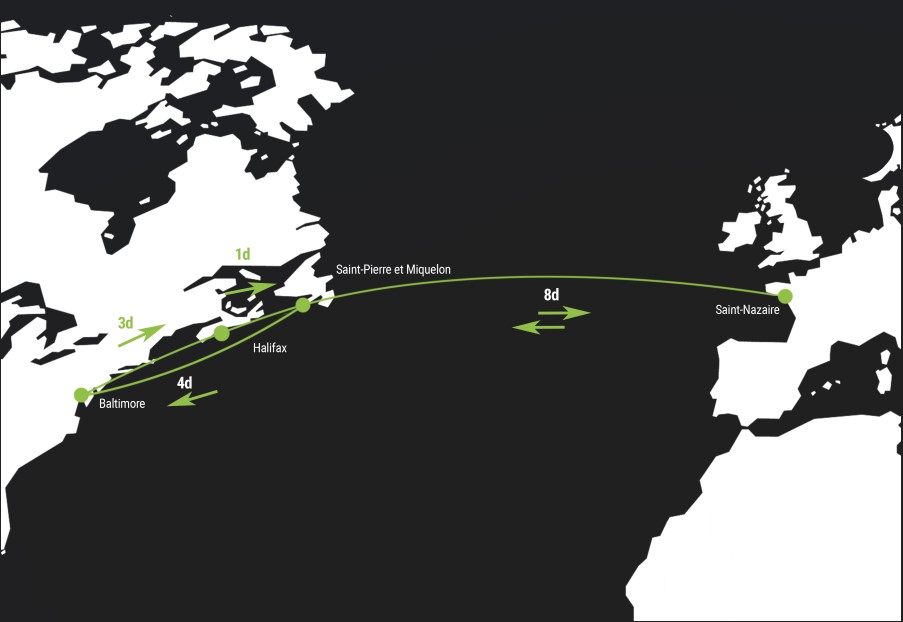
The regular monthly routes for Neoliner Origin will be from her home port in St Nazaire to…
- St-Pierre & Miquelon : 8-day round trip (2 ports of call per rotation)
- Baltimore : 13-day outward journey and 15-day return journey
- Halifax : 18 days outward and 10 days return
So why is a cargo ship of interest to Mechtravellers? Well here’s the good bit, Neolines will also carry passengers.
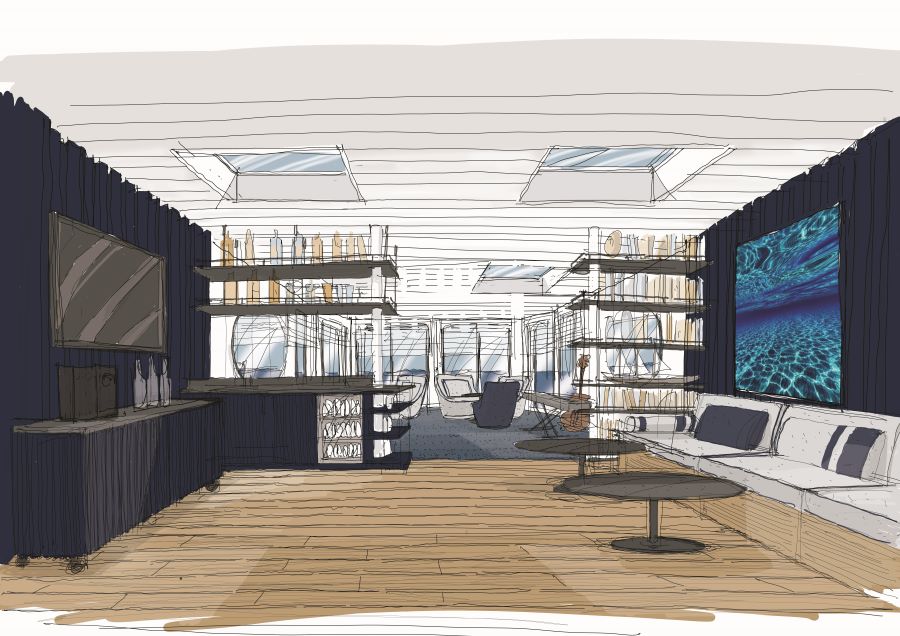
Details and booking here.
UPDATE (19/11/2025): There is a very good article in the Guardian from a journalist who was onboard for the first crossing.
UPDATE (10/11/2026): Neolines have published some details for Neoliner Origin‘s first year of operations…
- Origin added a new port of call to her routes – Zeebrugge.
- She has completed nine commercial round trips since entering service, covering over 62,000 nautical miles.
- She transported nearly 56,000 m³ of cargo (12,063 tonnes). That’s 1,845 cargo units including vehicles, containers, out-of-gauge cargo, industrial machinery and refrigerated goods.
- She also carried more than 170 passengers during this first year.
- She achieved her primary objective of making significant fuel savings.
Based on the GLEC (Global Logistics Emissions Council) fleet reference (comparing Neoliner Origin to an equivalent conventional vessel without sails, simulated over the same routes and operating at 15 knots), Origin saved 3,502 tonnes of fuel over a full year, representing an average reduction of 66% over the entire period and 70% when considering 2026 alone. These savings also represent 11,228 tonnes of CO² avoided.
It’s clear though that Origin has had technical problems with her Solidsails, which has significantly limited their operating time, particularly with all sails deployed. So she is returning to Chantiers de l’Atlantique for a short period to address those issues. Neolines think, when she returns to sevice, Origin should be able to make fuel savings up to 80%.
* The MarineTraffic app is a marvellous thing!