 By
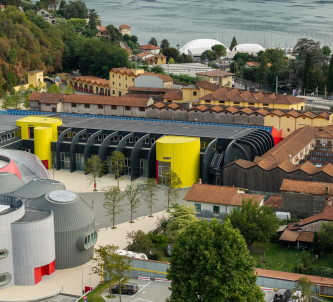
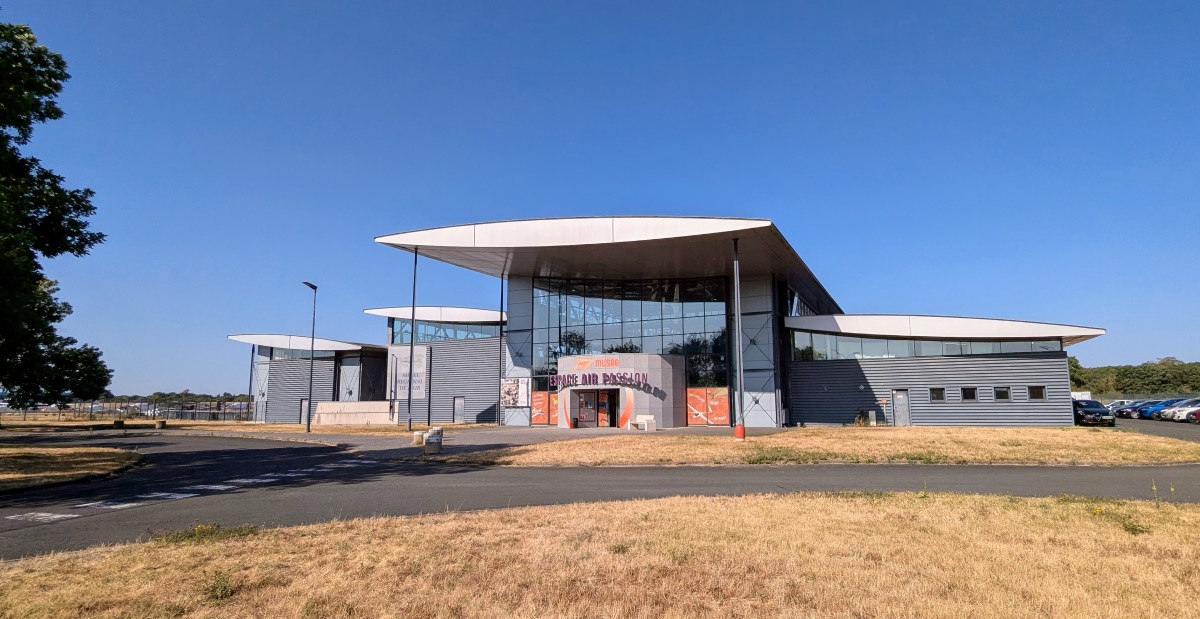
By The Musée Espace Air Passion at Angers airport does exactly what it says ‘on the tin’ – it’s a space, a giant hanger, filled with extraordinary aircraft and people who are passionate about them.
The majority of the collection here is made up of rare, often unique, civil light aircraft and historic gliders, some of which have been restored to an airworthy condition. And it is not just a museum in the traditional sense, it is a shop window for the Groupement pour la Préservation du Patrimoine Aéronautique (GPPA)*, an association set up by six enthusiasts in 1981, dedicated to preserving aeronautical heritage. Since 2020 it has been officially certified as a ‘Living Aeronautical Heritage Workshop’. Visitors who come to see the aircraft and aeronautical artefacts in the museum can also see into the workshops where specialists work year-round restoring vintage aircraft and gliders, and their woodwork, fabric coverings, engines, airframes, and instruments.
The museum’s building is light and spacious with lots of glass and walkways around the walls so you can get close to some of the suspended aircraft and look down on the collection. It may be spacious (3,500 m²) but into that space some 40 aircraft and dozens of artefacts, such as engines, are crammed. It doesn’t feel all that spacious on the ground floor!
So what does the Musée Espace Air Passion have on display?
Well, there are some pretty unusual, rare, and significant aircraft. I was shown around by François Blondeau, the Président of the Association.
The circular tour route through the building starts with the museum’s oldest aircraft, René Gasnier’s Gasnier III (1908).
Similar to the Wright brothers Flyer (for good reason, as you’ll see) the Gasnier III is a biplane with a canard control surface at the front and conventional tail surfaces. Unlike the Flyer which had a single engine powering two pusher propellers, the Gasnier III has a single engine driving a single pusher propeller.
René Gasnier started his aviation career in balloons. He made several long-distance balloon flights across Europe and even crossed the English Channel.. at night! In 1907 he represented the Aéro-Club de France at the 1907 Gordon Bennett Cup held in the United States. He took off from St. Louis in his balloon L’Anjou (named after his home region) and covered 1,800 km in thirty-eight hours, flying over the Appalachians and reaching the Atlantic coast.
none other than Wilbur Wright himself turned upHe returned to France in early 1908 inspired by the advances in science & engineering that he’d witnessed in the USA, and started working on a heavier-than-air flying machine. Then, astonishingly, in August, none other than Wilbur Wright himself turned up at the Hunaudières Race Course in nearby Le Mans to publicly debut the Wright Flyer. Gasnier and his brother Pierre were transfixed!
Straight away they started building a second prototype, the Gasnier II, which they successfully flew for approximately 500 metres at a height of about 5 to 6 metres, on 17 Sept 1908. The historic flight took place a few kilometres from Angers at a test field named La Grande Prée in Rochefort-sur-Loire. Shortly after, the Gasnier II crashed, slightly injuring René. This led to a number of flight control improvements and a larger 50hp Antoinette engine in his third prototype, the Gasnier III, which flew several test flights, some reportedly up to 1 kilometre. This is the aircraft, now restored, that lives in the museum.
Unfortunately Gasnier’s flying was cut short when severe flooding submerged their private testing fields at La Grande Prée (Hardly surprising, it was on the banks of the Loire!), so he took the opportunity to join with the Wright brothers and help set up their historic French flight school, which was designed to train the nation’s very first generation of licensed pilots.
In 1910, learning from his experience with Wilbur & Orville, he established Angers’ very first airfield and founded the Aéroclub de l’Anjou at Avrillé, a commune on the NW outskirts of Angers, making it the first formal aviation club created in France outside of Paris. It became the Angers-Avrillé Airport and operated till 1998 when it was dismantled to make way for urban expansion, at which point all operations and the museum (Espace Air Passion) moved to the current Angers-Loire Airport in nearby Marcé NE of Angers.
So, like his pioneering aircraft, René Gasnier is very much at the heart of the museum.
There are too many amazing and largely unknown historic aircraft on display at the museum, but here are a few of them…
The Microjet 200-B, is exactly what it says it is, a 21 ft long, 2-seat jet trainer powered by two small gas turbines, giving it a maximum speed of 463 km/h (287 mph).
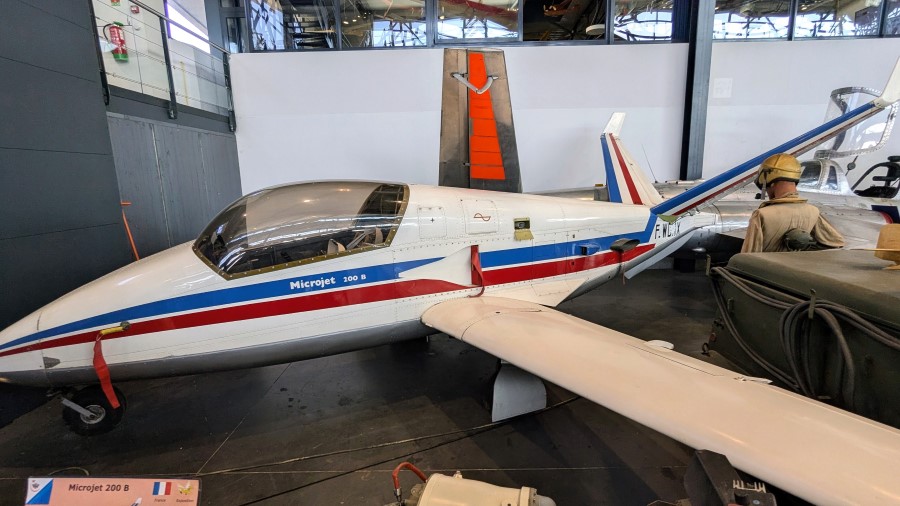
It was designed and built by Microjet SA, who hoped to supply it as a cheap to buy, fly (low fuel burn) and maintain, military jet trainer to countries with limited budgets. The prototype first flew on 24 June 1980. Then three Microjet 200-B pre-production models were built. Only the third had winglets added to the tail, which would make this the last of the Microjets because sadly the aircraft failed to secure enough orders and the project was cancelled.
One of the most significant aircraft in the collection is the Gérin V-6 E Varivol
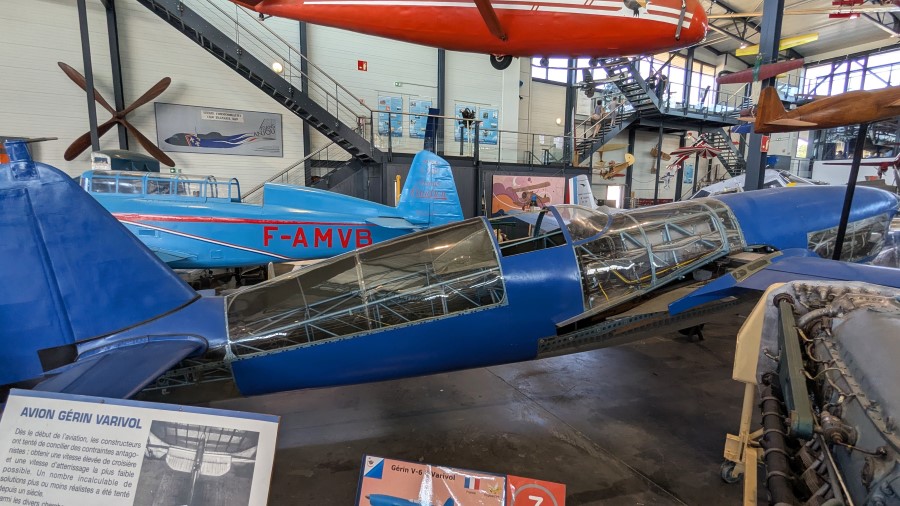
This was one of the first practical attempts to reconcile two opposing aeronautical constraints: achieving a high cruising speed while enabling the lowest possible landing speed. We are all familiar with the more recent examples of how this works; the swing-wing F-14 Tomcat, F-111 Aadvark, and B-1B Lancer. The Varivol was one of the first attempts to solve this problem.
In the 1930’s Jacques Gérin, an engineer at the Compagnie Française d’Aviation, suggested a wing with variable wingspan and surface area. He designed a biplane where the upper wing with additional flexible surfaces inside the fuselage could be extended using an electrical motor to increase the wing area. His idea worked… until it didn’t. In November 1936 it was destroyed in a fatal crash, an investigation determined the accident was not due to the variable-area wings.
Undaunted, he then designed the V-6E Varivol, a sleek monoplane, for the Deutsch de la Meurthe international speed competition. He estimated it would be able to fly at 455 km/h at an altitude of 2,000 metres (6,500 ft) and that, thanks to his variable-surface wing design, the landing would be at a stately 92 km/h. Sadly, it never flew. Global events caught up. It was stored during World War II and later rediscovered in a barn around 2000 before being brought to the Musée Espace Air Passion.
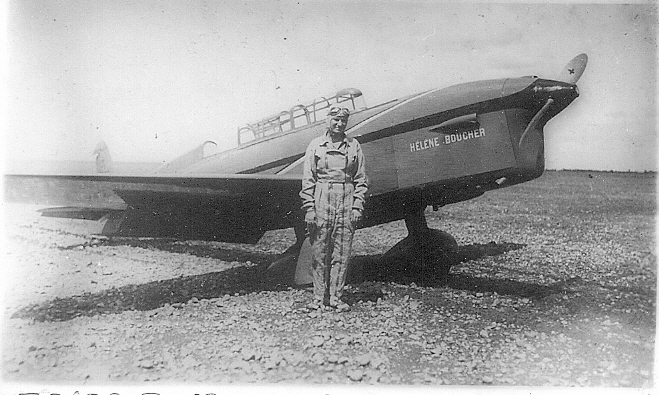
Behind the Varivol in that photo is a replica of the Caudron PC431 Rafale, a two-seater touring aircraft in which Hélène Boucher, a well-known pilot in the 1930s, won the women’s prize in the 12 Hours of Angers race 1933. Sadly, only a year later she died in a landing approach accident in F-AMVB on 30 November 1934.
For me, one of the most interesting… and bizarre… aircraft in the collection is the Alérion Riout 102 T.
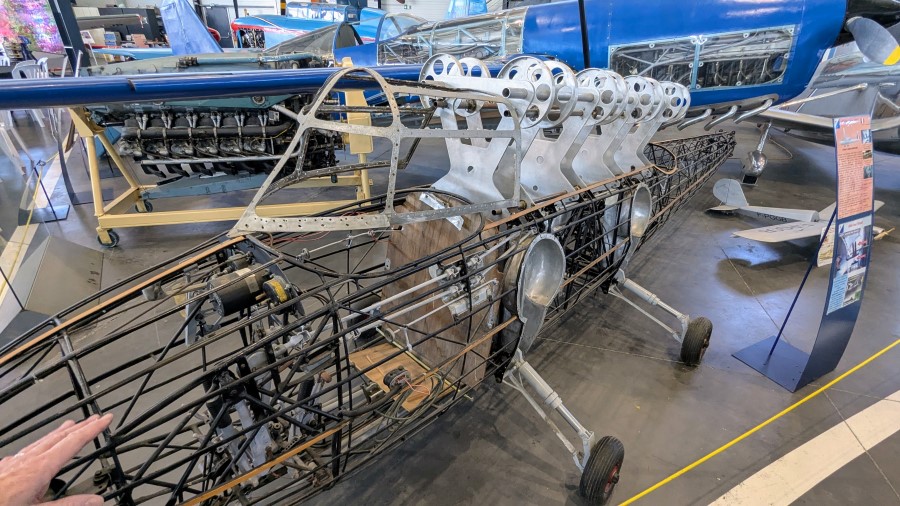
Now I thought the idea of flappy wings died out in the 19th century, but seemingly not! The Riout 102T Alérion was an ornithopter built in 1937 designed by René Riout.
Guys…?! Thirty-four years…three and a half decades after the Wright brothers, you’re still working on flappy wings?? Seriously???
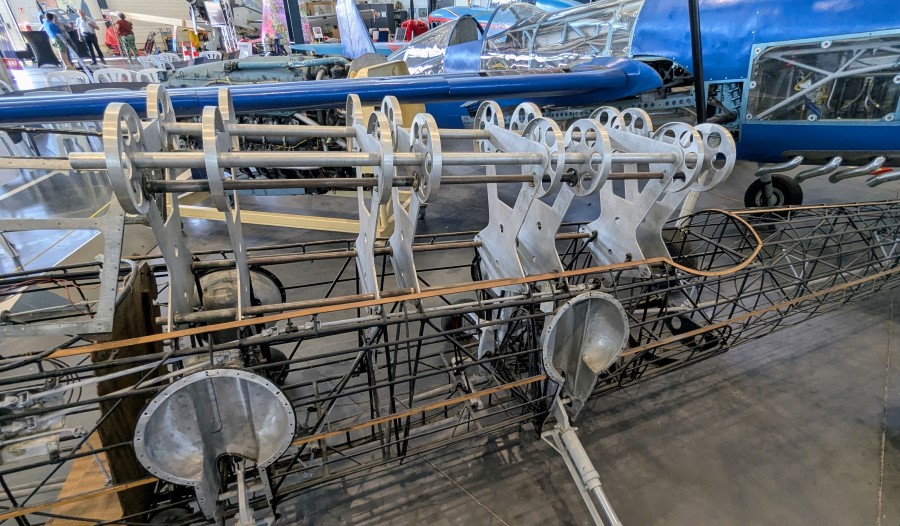
Not surprisingly it attempted some ground tests which included a wind tunnel test in 1938 when the wings suffered “a structural failure” (probably torn right off!). Then WW2 intervened and thankfully it was stored before killing anyone.
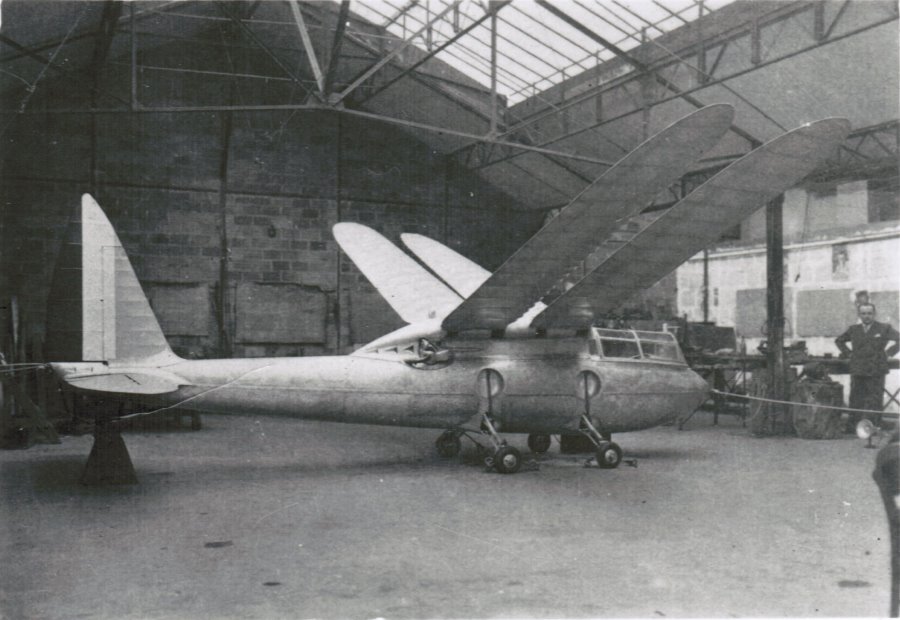
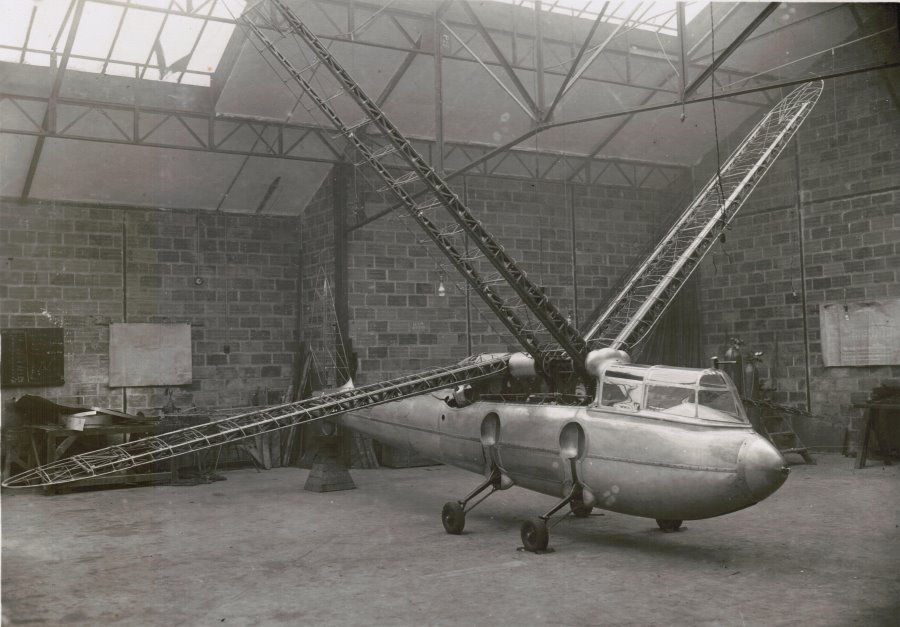
It was found again in 2005 when it was brought to the Musée Espace Air Passion and the fuselage with its wing gearing was partially restored.
The record-breaking Leduc RL-21 No. 1 is an elegant aeroplane.
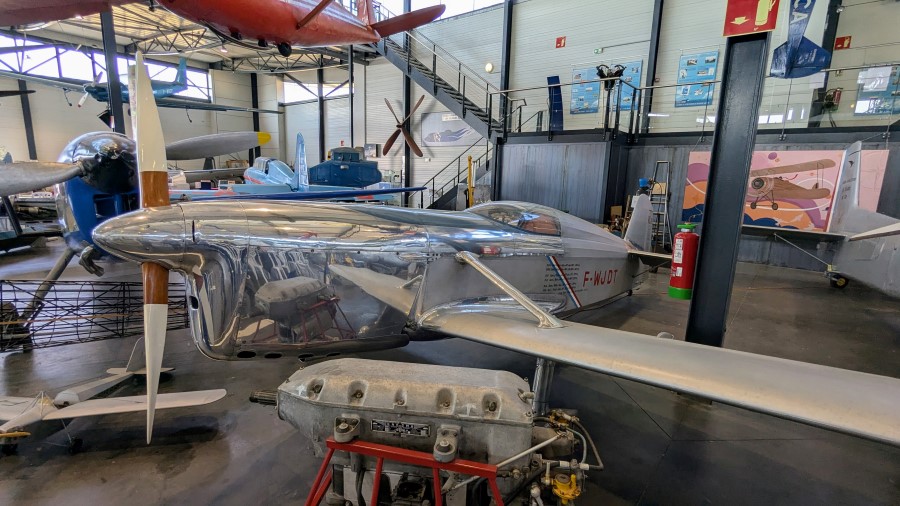
In 1925, René Leduc graduated at the top of his class from an aviation training course in Angers and from 1927 started building aircraft including the RL-16, which set two altitude records. In 1954 he started work on the RL-21** Sadly he didn’t have the budget for a modern, lightweight engine; instead, he had to settle for a rather heavy second-hand 135 hp SNECMA-Régnier 4L-00 four-cylinder engine driving a two-blade propeller. Despite this the RL-21 first flew in August 1960 and went on to break seven world speed records for light aircraft. The aircraft is classified as a Historical Monument. It is preserved by the Aéroscope-Atlantique association, which loans it to Espace Air Passion.
Don’t be confused – There were two innovative French aircraft designers called René Leduc born 9 years apart.
- René Henri Leduc (1898–1968) was the famous industrial engineer known for pioneering thermo-propulsive engines and high-speed ramjet jet propulsion. In 1949 he developed the Leduc 0.10, the world’s first aircraft powered solely by a ramjet engine, followed by the 0.16, 0.21, and the jet/ramjet hybrid interceptor Leduc 0.22. You can see the extraordinary Leduc 0.10 and Leduc 022 in the Prototypes Hall at the Musée de l’Air et de l’Espace at Le Bourget, Paris.
- René Leduc (1907 – 1990) was the amateur light aircraft designer who built the RL-21 which set seven world speed records in its weight category during the 1960s.
The Fournier RF-8 is one of the museum’s unique aircraft.
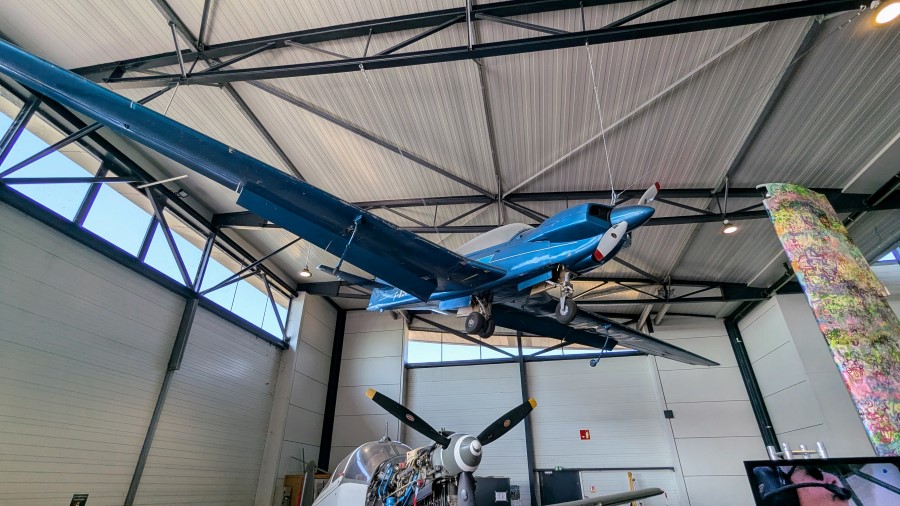
It was an all-metal, tandem two-seat military training aircraft designed by René Fournier who previously had specialised in motor gliders. You can see that glider influence in the long slender wings and its Lockheed U-2 spyplane-style bicycle undercarriage. Though, unlike the U-2, the RF-8 didn’t drop its outrigger wheels (called “Pogos” on the U-2) on take-off. They folded up into the wings.
The RF-8 first flew on 19 Jan 1973, but sadly, what makes it unique is that this aircraft (F-WSOY) was the only prototype. Due to lack of state funding, it never went into production.
The Potez 60 Sauterelle (“Grasshopper”) is a French open-cockpit 2-seat trainer that first flew in 1935. An order for 250 was placed by the French government, but deliveries stopped after 155 aircraft were produced.
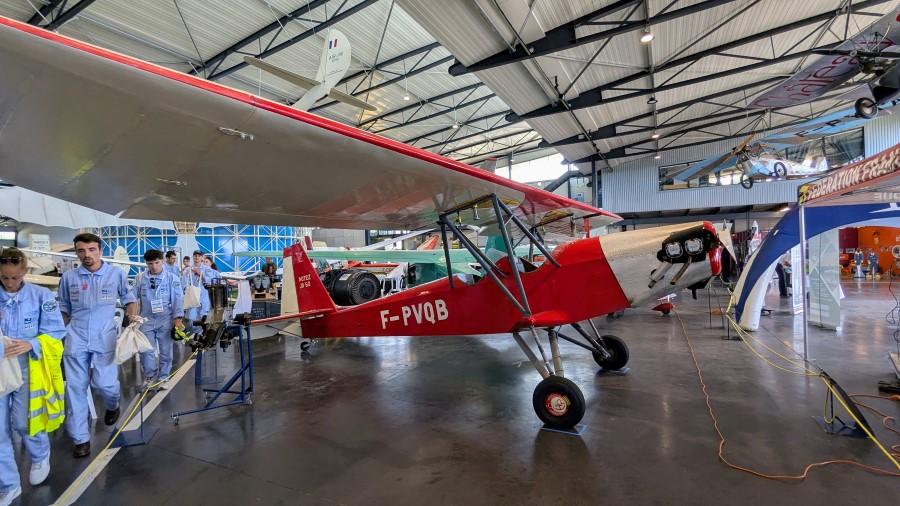
The Potez 60 was perfect for training. It was/is robust and very stable in flight; if left to its own devices in any attitude, even at the lowest speeds, it automatically returns to level flight.
This particular aircraft was built by Jacques Delattre in the 1960s using parts from a Potez 60. It was completed in 1975. To distinguish it from factory-built models, it was named the Potez JD 60.
BTW, those guys in the light blue overalls? They were young pilots on this year’s Tour Aérien des Jeunes Pilotes (Young pilots aerial tour). It’s a bi-annual event. The tour brought together 46 young pilots aged 18 to 24. They were selected via a competitive exam from 600 flying clubs across France to fly their own aircraft on a two-week journey across the country. This was their Angers stopover.
The Caudron C.640 Typhon was a pretty cool aeroplane. It was designed specifically as a high-speed single-seat mailplane. It first flew on 17 June 1935.
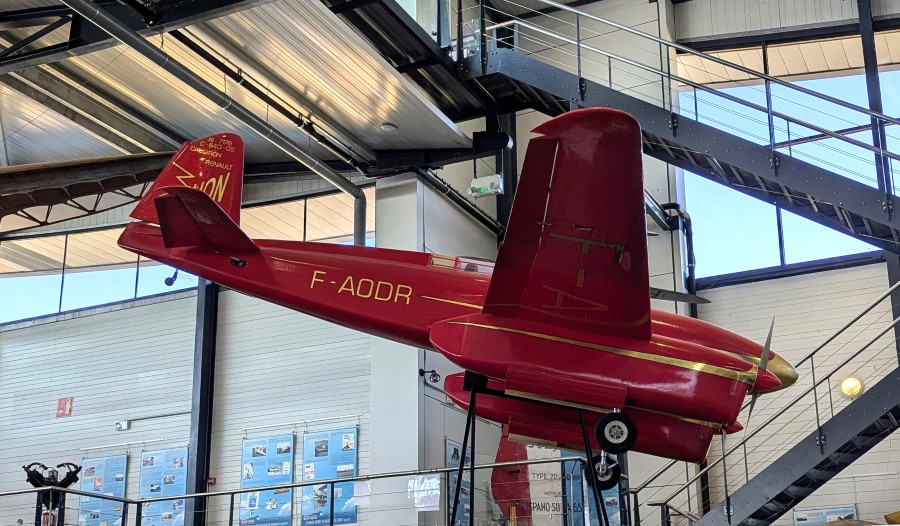
This one, the fifth off the Caudron-Renault production line (there were only seven), was modified to set a 311 km/h (193 mph) average speed record over 5000 km. It also competed in endurance races like the 1937 Istres–Damascus–Rome air race.
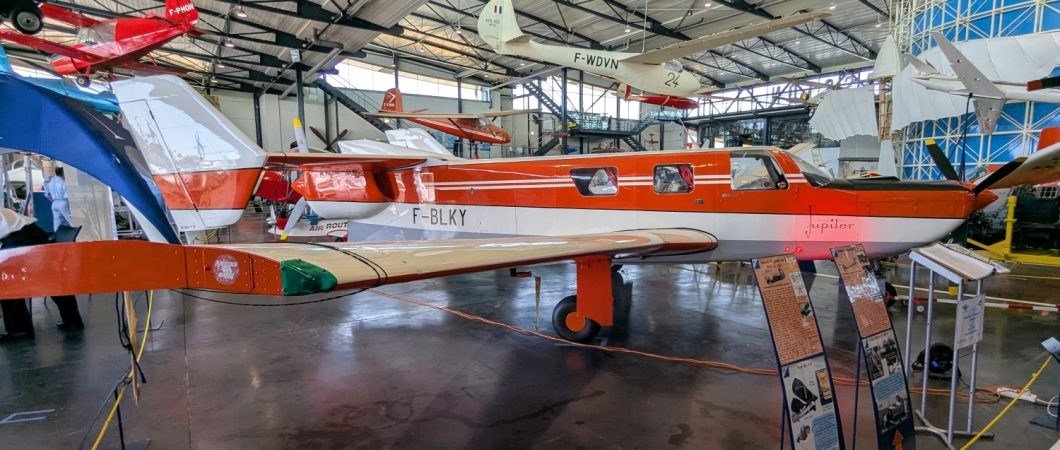
One of the museum’s prized possessions is the Moynet 360-6 Jupiter, a 6-seat business aircraft with two engines in a push-pull configuration.
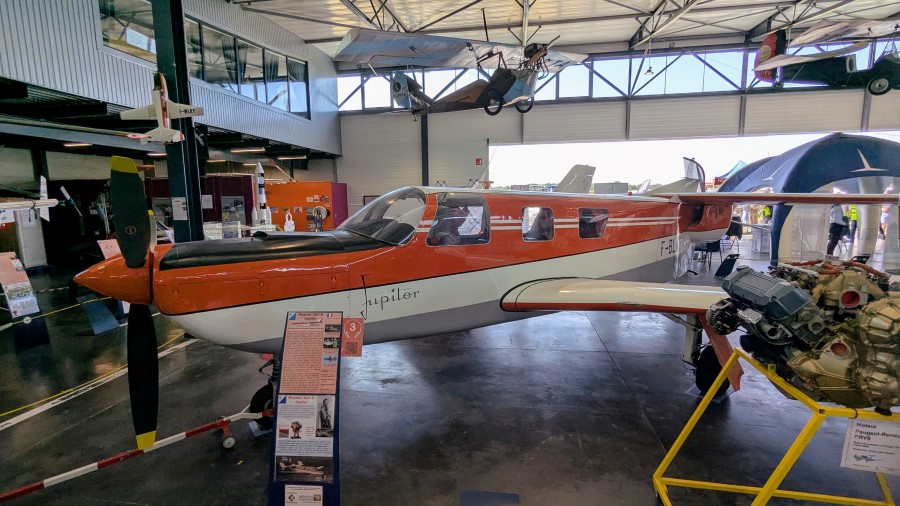
André Moynet was quite a guy! He was a hero of the famous French Normandie-Niemen squadron, which served on the Russian front (1942–45)***. After a post-war career as a test pilot (which included working on the Sud-Aviation Caravelle), he had two wins at the Le Mans 24 hour races, one as a driver in 1953, and one as a designer in the 1975 edition. He also designed sports boats, so no surprise that he should turn his skills to aircraft design.
In 1961, he embarked on a project to build a 6-seat business aircraft that would offer the safety of a twin-engine plane while handling like a single-engine model. It featured a distinctive “push-pull” engine configuration, with one engine pulling and the other pushing. This configuration had several advantages. Not having two engines mounted on the wings meant: reduced drag, no asymmetric thrust in the event of an engine failure, and a simplified wing and airframe structure.
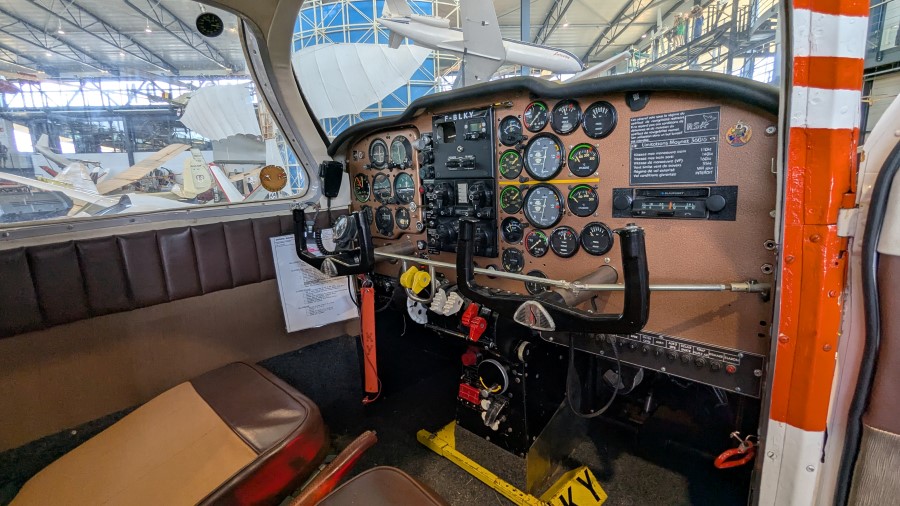
The Moynet Jupiter was the first and only French push-pull aircraft. It made its maiden flight on 23 May 1965. Despite its merits, this six-seat business aircraft never entered serial production due to a lack of orders. In 1970, the aircraft was entrusted to a flying club but there came a point when the club couldn’t afford the cost of maintenance and it was left to deteriorate.
They probably couldn’t afford the fuel either! François Blondeau told me that it guzzled fuel, “160 litres an hour. Ooh la la!”
Finally, in 1990 André Moynet gave it to the museum to be restored. It took over a quarter of a century to get it airworthy, and it flew again on 26 July 2018. However its flight window with the museum remained brief. Its last flight was 29 May 2021.
Not just aeroplanes, but helicopters too at Musée Espace Air Passion
There were three ‘whirly things’ on display when I was visiting; two helicopters and an autogyro.
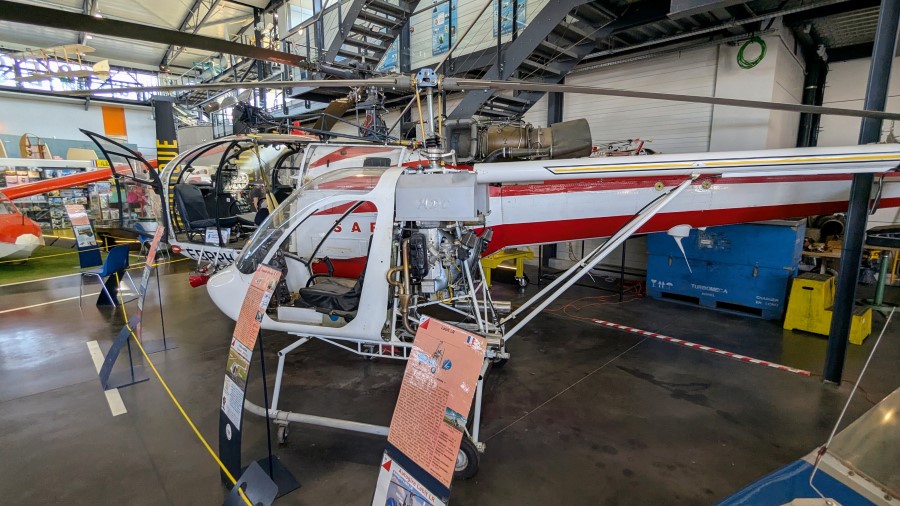
Aérospatiale Alouette III France’s ubiquitous multi-purpose turbine helicopter, used by everyone: the military, gendarmes, rescue services, medical evacuation, crop-spraying, observation & mapping etc, since it first flew in 1959. Over 2,000 of these versatile aircraft were built. Sadly, this one is not in flying condition. “Too expensive!” says François.
The Rigault RPH-01 was a single-seat, single-rotor, home-built helicopter started by aviation enthusiast and amateur aircraft designer Pierre Gibert in the 1970s. It was powered by a vertically-mounted 67hp Volkswagen car engine… and that was the problem; there wasn’t enough ceiling height in his apartment. So the helicopter remained unfinished until 1997 when he sold it to Paul Rigault.
History doesn’t record, but I like to think there was a Mrs Gibert who said something along the lines of “Either that machine goes or I do!”
Paul Rigault resumed work on it in 2000, and ultimately completed the build, but it only reached the test phase on the ground and in tethered flight. It never achieved free flight. In 2012 it was donated to the museum.
What should be the collective noun for a bunch of gliders? I’m going for a “swoop”!The Labit LR Autogyro was another home-build. (I didn’t get a photo of it – désolé!) Built in 1988 by Henri Labit this aircraft logged an impressive 600 flight hours over its operational lifetime. Its most famous milestone was a remarkable cross-country journey from Angers to Castres in southern France. Because small autogyros have limited fuel capacities and travel at lower cruising speeds, the trek was completed successfully across three separate flight stages. This journey proved the structural reliability of the home-built autogyro and demonstrated the viability of its custom-adapted Citroën flat-twin automotive engine over long distances.
Musée Espace Air Passion Gliders
The museum has a large collection of gliders or ‘sailplanes’…
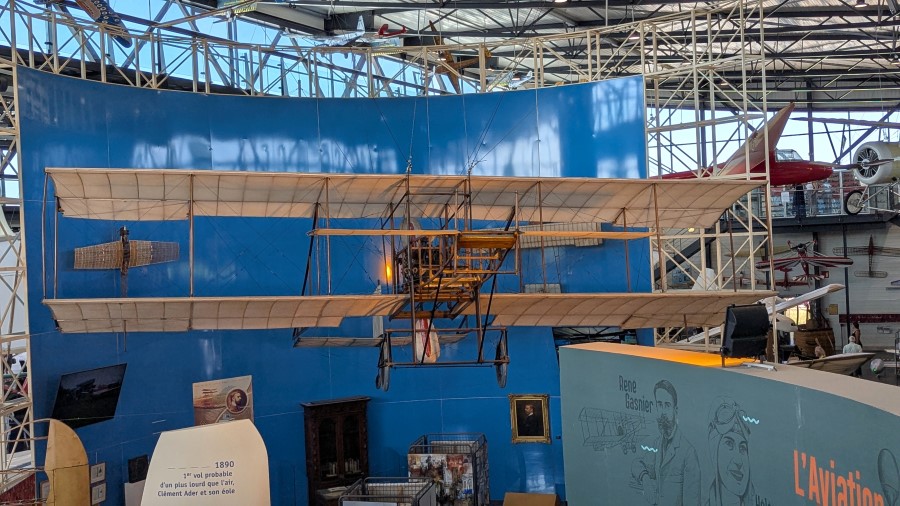
Probably the largest and oldest of which is the full-scale replica of the 1868 Albatross II glider designed by French inventor Jean-Marie Le Bris
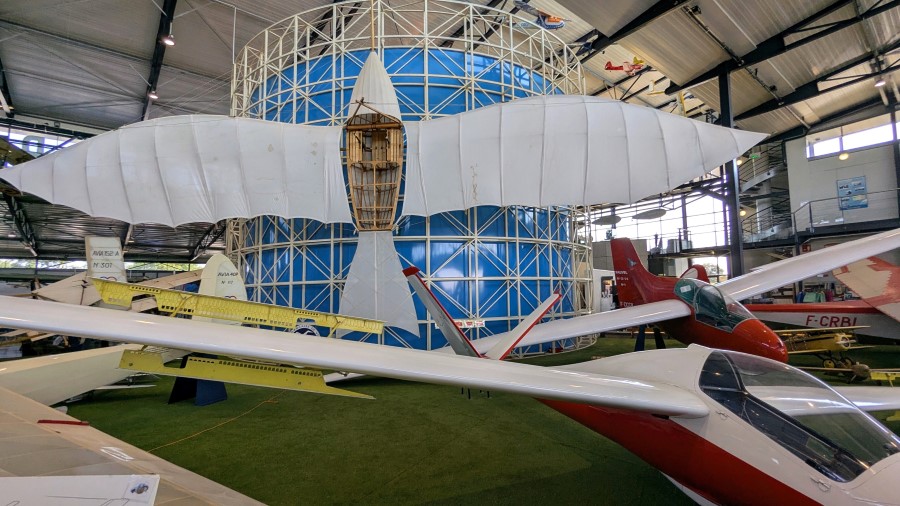
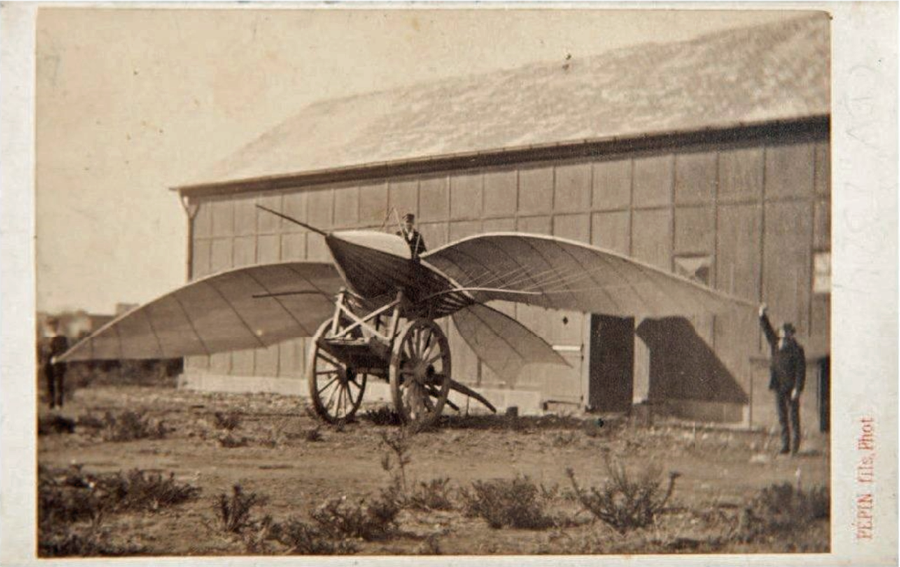
The Albatross II is the one on the wall. Unlikely as it seems, this did fly! More than once. The first version, his Albatros artificiel (it looked very similar) was launched successfully from a cart being towed by horses as fast as possible along the beach and flew for 200 metres. It later crashed and this was his second version, which also got airborne. The story is here.
What should be the collective noun for a bunch of gliders? I’m going for a “swoop”!
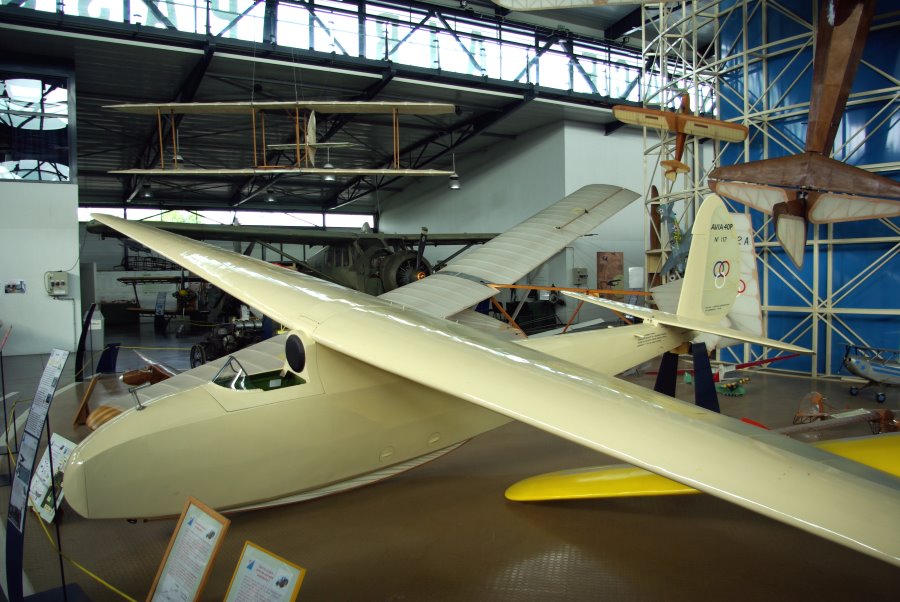
BTW just offscreen to the left of the Albatross photo above, is the Avia 40P one of the museum’s four registered Historic Monuments (the same classification as a château). You can see it better here…
In the foreground of the “swoop” of gliders, with the extended yellow air brakes, is the Bréguet 905s Fauvette (Warbler).
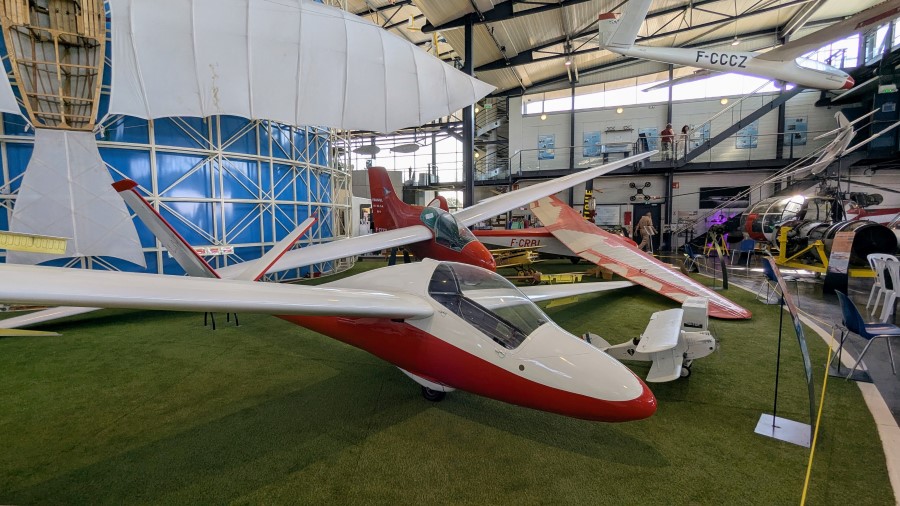
The Warbler was a competition sailplane designed by Jean Cayla for the Bréguet aircraft company. First flown in 1958, it pioneered the use of lightweight composite structures using plastic and Klegecel (a plastic foam-filled sandwich) layered with thin plywood to constructthe wings. Only 50 were made, and following a mid-air break up in 1969, they were grounded. Afterwards a few were rebuilt. This one of them.
Do you see the red glider with no tailplane? Looks like a Messersmitt 163 without the rocket…? That’s the Fauvel AV-22, which first flew in 1956 and was designed as a DIY homebuild glider.
And later versions could have a propeller engine on the front if you wanted, for powered takeoffs. Then you switched it off and glided.
Behind it, with the registration F-CRBI, is the Castel C.25S side-by-side two-seat trainer designed by Robert Castello around 1940. He hoped to encourage recreational flying in southern France, which is exactly what these wooden and fabric aircraft did, becoming the core of the French glider training fleet throughout the post-war era and into the 1960s.
And suspended above is another Jean Cayla designed sailplane, the Siren C30 Edelweiss (F-CCCZ). It first flew in September 1962. and around 50 were built. It finished second in its class at the 1963 World Gliding Championships in Argentina, and took first place two years later at the 1965 Championships in the UK.
The graceful DFS Weihe (“Harrier”) sailplane must have looked incredibly futuristic in its day.
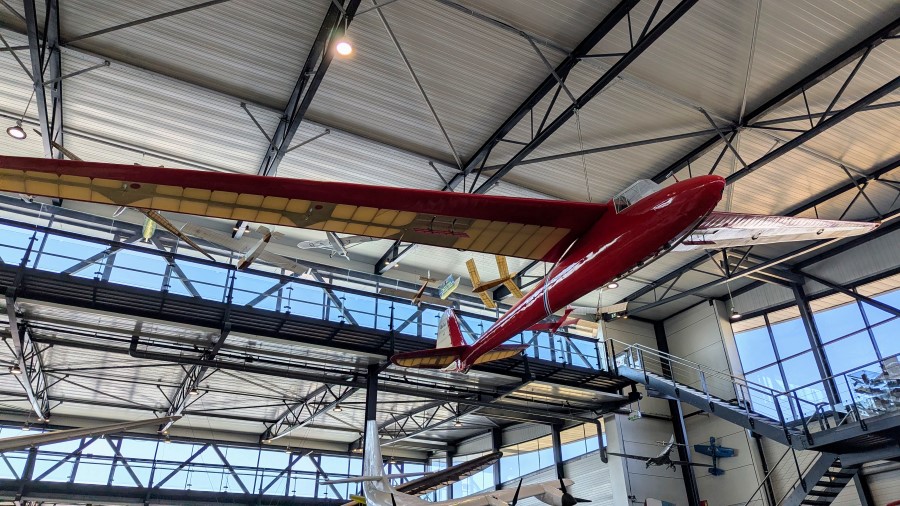
It was designed by Hans Jacobs at DFS (Deutsches Forschungsanstalt für Segelflug, German Research Institute for Soaring Flight) in 1938 and post-war became the standard high performance sailplane in most European countries, setting a number of world records. years. This one, which was captured in 1945, is one of only three surviving examples, and is one of the museum’s Historic Monuments.
And remember, in 1938 many of Germany’s wannabe Luftwaffe pilots were learning to fly in machines like the Schneider DFS 108-14 SG-38 Schulgleiter (School glider), which the museum has in its restoration workshop (see below)….so the Weihe must have seemed like an aircraft from the future!
The Nord 1300 is the French-built licensed version of the famous German Schneider ‘Grunau Baby’ IIb single-seat training glider. Designed originally in Germany by Edmund Schneider in 1931 as the ‘Grunau Baby’. Built in France by Nord Aviation (Société Nationale de Constructions Aéronautiques du Nord) after World War II as the Nord 1300.
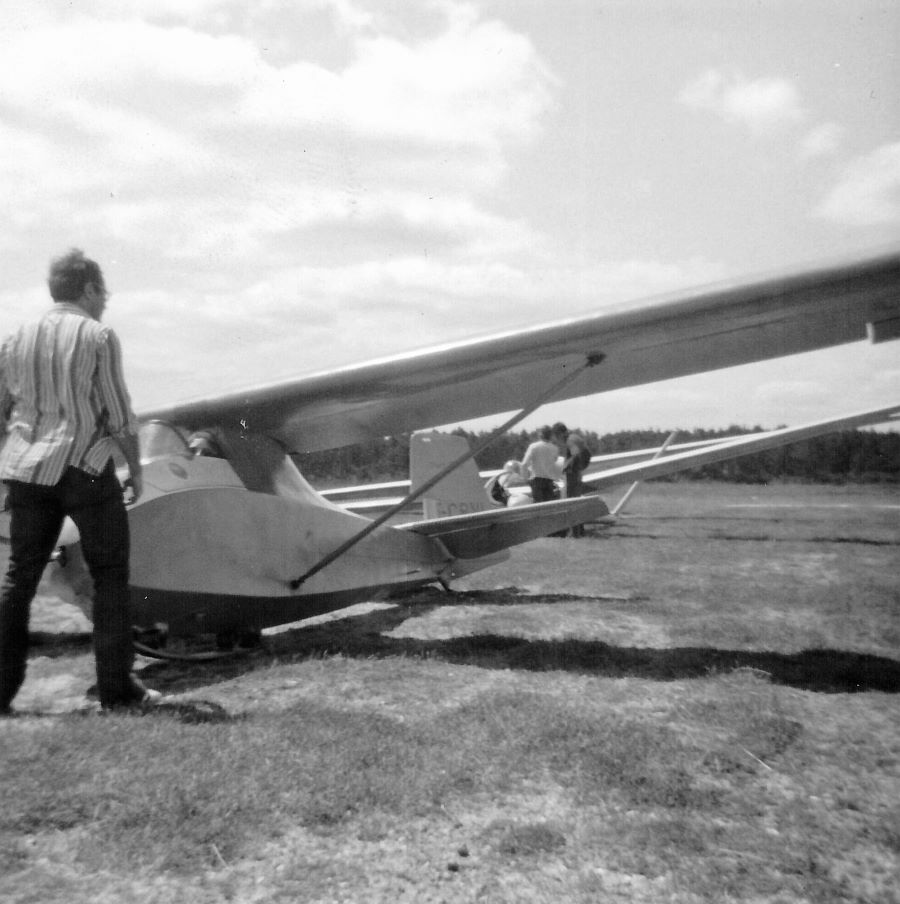
I stupidly didn’t get a photo of it while visiting. I should have done, but didn’t realise its significance; this was the restoration that started the GPPA* & the museum.
Musée Espace Air Passion Restoration Workshops
The key role of the GPPA and its showcase (museum) is restoration. Visitors can see the workshops in action from the doorways, and go inside on guided tours. Some restorations take years. On my visit, they were several projects in different stages of completion. due to start work on their 1938 German Schneider DFS 108-14 SG-38 Schulgleiter (School glider).
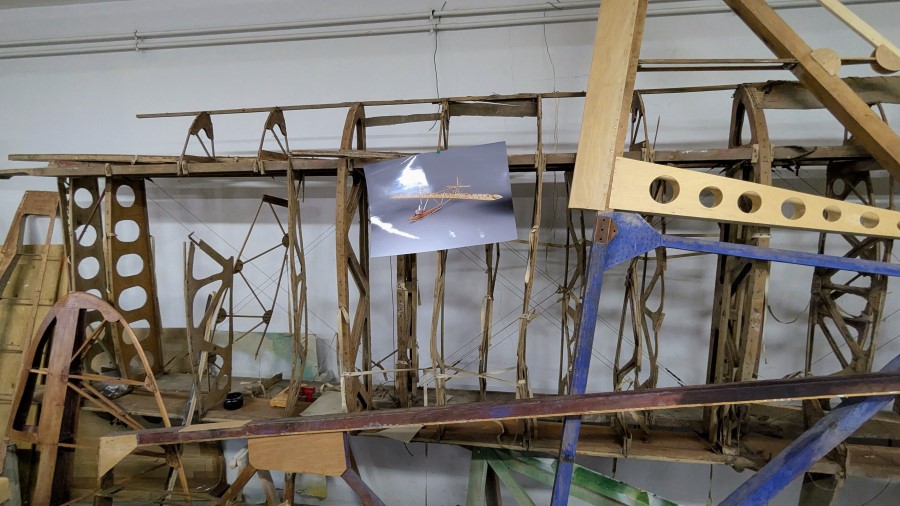
A Cessna UC-78 Bobcat dominates the workshop space at the moment, not least because the main wings are a single 12.8m (41 ft 11 in) spar.
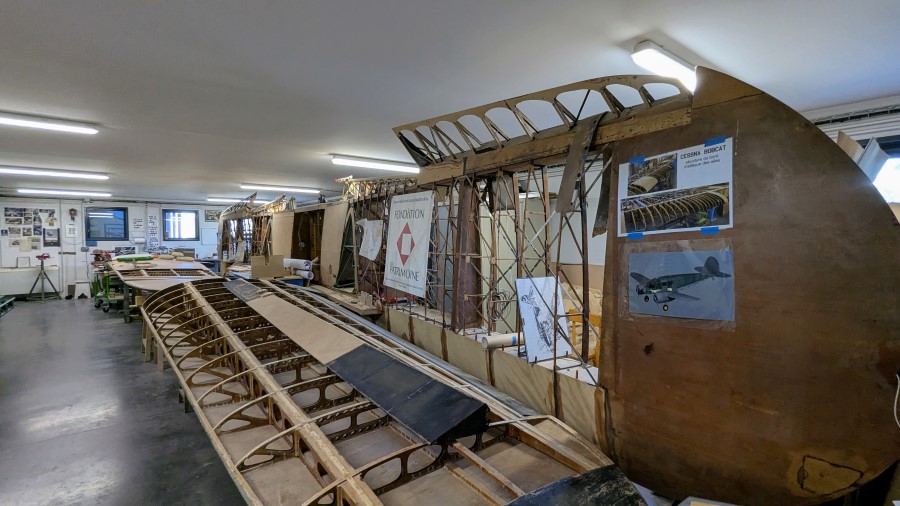
The Bobcat was originally the Cessna T-50 a civilian twin-engine passenger/transport aircraft, first flown in 1939. It was powered by two Jacobs R-775 engines, producing 245 hp each.
When war broke out, the Royal Canadian Air Force and USAAF realised they needed an aircraft to train pilots in multi-engine flying, so Cessna suddenly got orders for hundreds of military trainers designated UC-78. Nearly 5½ thousand were built between 1939 -1944. The Americans called them ‘Bobcats’. The Canadians called them ‘Cranes’. And many B-17, B-25 & B-24 pilots first learned how fly multi-engine aircraft in UC-78s.
Now, says François, there are only four UC-78s in Europe: this one, one in Rotterdam, one in Kraków, and four years ago a team of Germans built one in California and flew it to Bavaria.
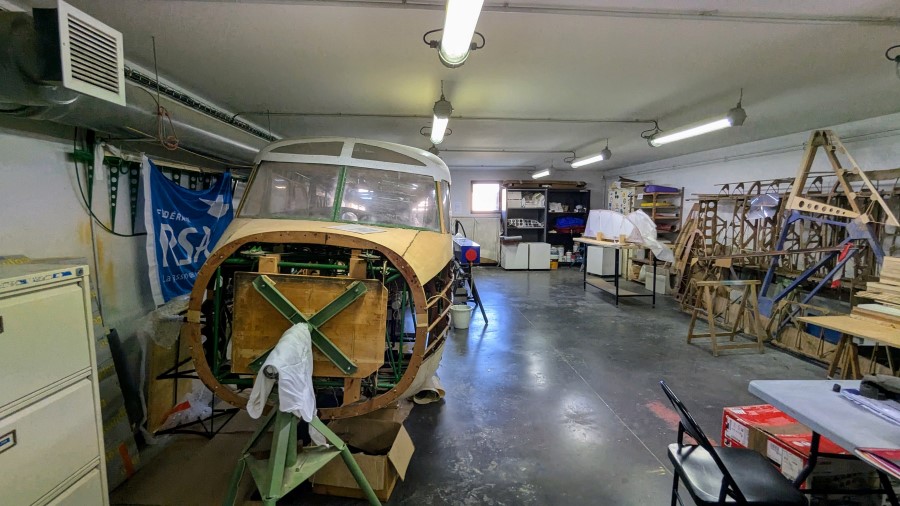
“This one was built in 1943,” says François “We have all the story. It didn’t train any pilots, because it was sent to the US Army in Africa as a transport.That’s (pointing) the wing of the UC-78. Seven years of restoration, because it was in very bad condition. For the Bobcat, we estimate 14 years to put it in flying condition.”
You can see what an airworthy Bobcat looks like in this walkaround video filmed at the Mid America Flight Museum.
The projects under restoration in the two workshops are always being juggled around as work on one stalls while parts are sourced, and another can move ahead. Outside the workshops in the main hall, for example, is a Nord 3400 awaiting the completion of its restoration.
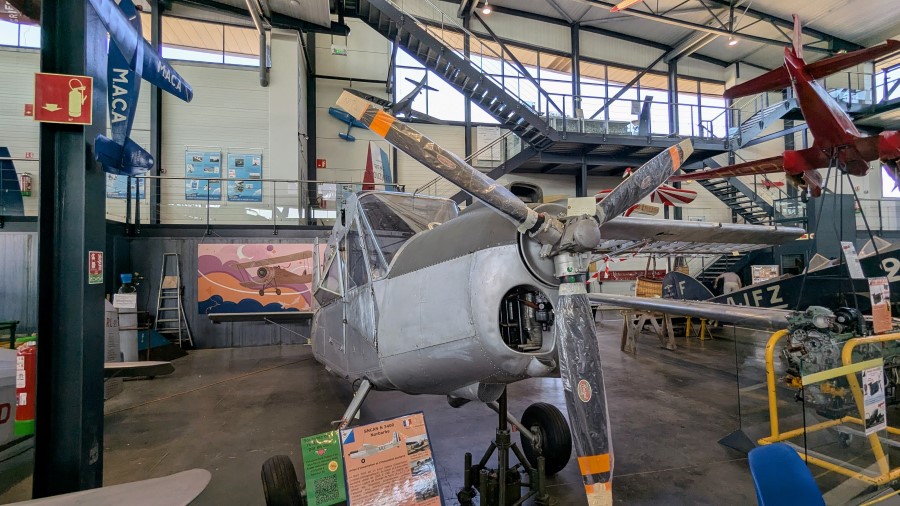
The Nord 3400 is a two-seat light aircraft designed for observation, photographic recconaissance, liaison (passenger transport), and medical evacuation. It was operated in Algeria between 1959 and 1961 by the French Army Light Aviation (A.L.A.T.) and could take off from any airstrip at least 150 meters long. During the Algerian War, it soon faced competition from helicopters, resulting in a total production run of only 150 units. A few examples also saw service with the Gendarmerie.
Since late 2012, museum volunteers have been working on the restoration of this one, No. 78, which had sustained minor damage. Spare parts (sourced from the wreckage of Nos. 45 and 123, as well as from crates of spares), sets of blueprints, and the maintenance manual make its restoration possible. Once reassembled, re-covered, and fitted with an engine, the plan is to fly it again as a vintage aircraft.
(If you’re wondering why the signage says its a ‘SNCAN N 3400 Norbarbe’, SNCAN stands for Société Nationale de Constructions Aéronautiques du Nord. Which was changed to Nord in 1956, and Norbarbe was a company name for the N 3400.)
Musée Espace Air Passion Events and other artefacts in the collection
The museum is not just about rare aircraft and restoration. It was renamed Espace Air Passion (from Musée Régional de l’Air) in 2013, because that’s what it is all about; a passion for aviation in whatever form that takes. That’s why there are so many volunteers at the museum helping enthusiasts, schools, families, wannabe pilots and future engineers discover or indulge their passion for aviation.
It might be that their passion is for aviation literature, or films, or art.
This summer the museum held a temporary exhibition: “De l’Air, de l’Art” by painter Joël Rougié, showcasing approximately forty paintings. About ten of these focused heavily on aviation themes, such as legendary aircraft (like a Waco ZPF and a Caudron C275), an intricate depiction of an engine, and large-format historical scenes like a Short Empire flying over New York.
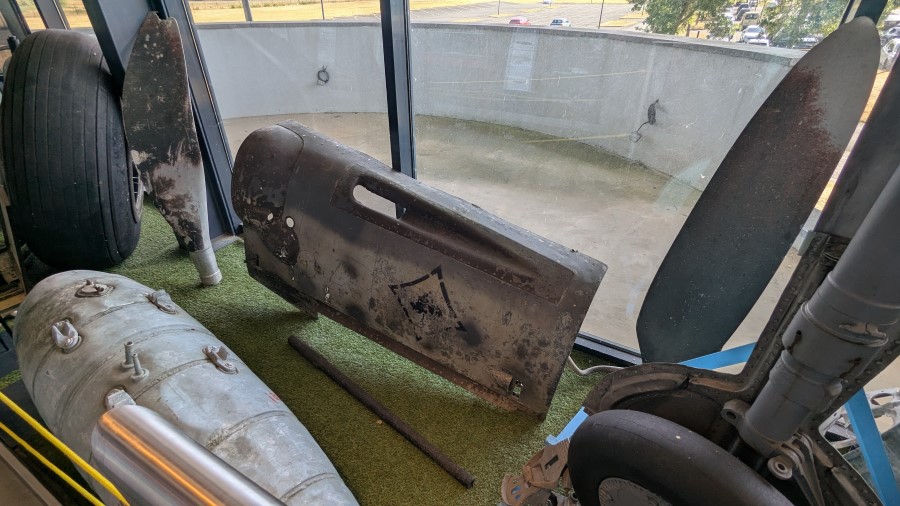
It might be an interest in local war history. Up in the galleries there is a small “wreckology” collection of parts of Allied/Axis warplanes that crashed in the area during WW2.
It might be a love of models. Many of today’s generation of aviation historians developed their interest as kids making plastic models, and one thing you notice in and around all the large exhibits in the museum, are the models. Introduced to the collection in 2004, there are now over 100 scale models on display, some static, some flyable (radio controlled), and some are antiques over 80 years old. The collection also includes over 1,000 model aircraft engines.
Every year, usually over the Easter weekend, since 2006 the museum has held its ‘Anjou Ailes Maquettes’, an annual gathering and exhibition-competition for flying scale and semi-scale model aircraft. I love the idea of RC model aircraft towing RC model gliders into the air!
The museum maintains four flyable powered aircraft and two flyable gliders, although there are 20 aircraft in total (maintained & non-maintained) that are “technically airworthy”… including René Gasnier’s Gasnier III!
Outside on the apron are three of those airworthy powered aircraft (the fourth is the Potez 60 parked just inside).
The museum acquired this Piper Cub in 1992 and restored it to flying condition. Piper J-3 Cubs were civilian aircraft which the U.S. Army repurposed as the Piper L-4H ‘Grasshopper’ for observation, liaison (carrying military passengers & messages), artillery spotting, medical evacuation, and aerial photography.
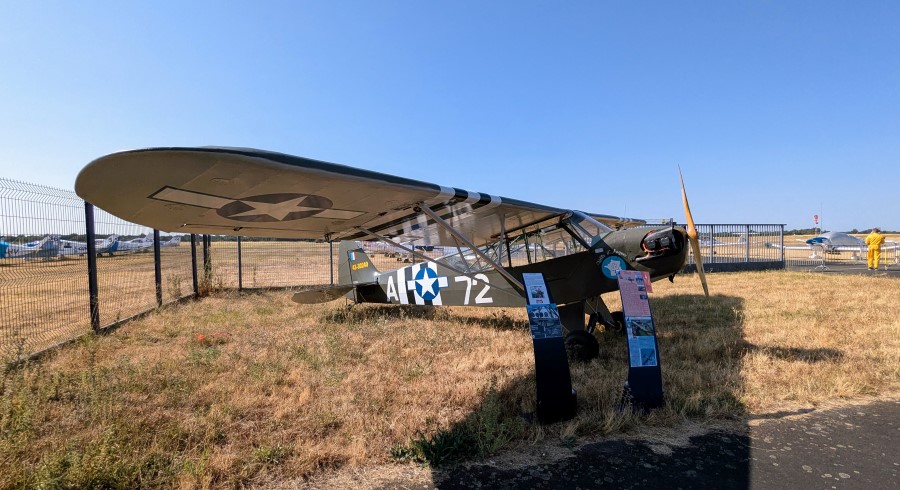
This particular L-4H was built in 1944 at the Piper factory in Lock Haven (USA) and served in Normandy, hence the black & white ‘invasion stripes’. It has been painted in the livery of the Piper that, on 24 August 1944, delivered General Leclerc’s message to the Parisian Resistance fighters: “Hold fast, we are coming.”
These aircraft have never really got the recognition they deserved. Not glamourous like fighters and bombers… not even as glamourous as militarised civilian transport aircraft like the Douglas C-47, these small, slow, & vulnerable aircraft nevertheless worked tirelessly in multiple roles at the front.
And they did have teeth! Real teeth!
The British version of the Piper L-4H was the Taylorcraft Auster. It was very similar to the American Piper, and it performed the same roles flown by British Army, not RAF, pilots. In his book Above the Battle – An Air Observation Post pilot at war, Ronald Lyell Munro describes his wartime experiences flying Austers from Normandy to Germany. His primary mission was as an aerial Observation Post; finding targets and directing artillery onto them. Despite flying dangerously low and slow, he and his colleagues were rarely shot at by the enemy. Why? Because the Germans knew that if they exposed themselves, they could expect a rain of shells within minutes! If they were in Normandy the rainstorm might include 14″ naval shells! Tiger tank commander, Ernst Streng in his war diary cursed the “damned English crow” flying circles tantalisingly low. A tempting and easy target, but untouchable.
Rather like the Bobcat in WW2, there can’t be many military pilots in the RAF or RCAF during the Cold War era who didn’t learn to fly on the famous de Havilland DHC-1 Chipmunk 2-seat trainer.
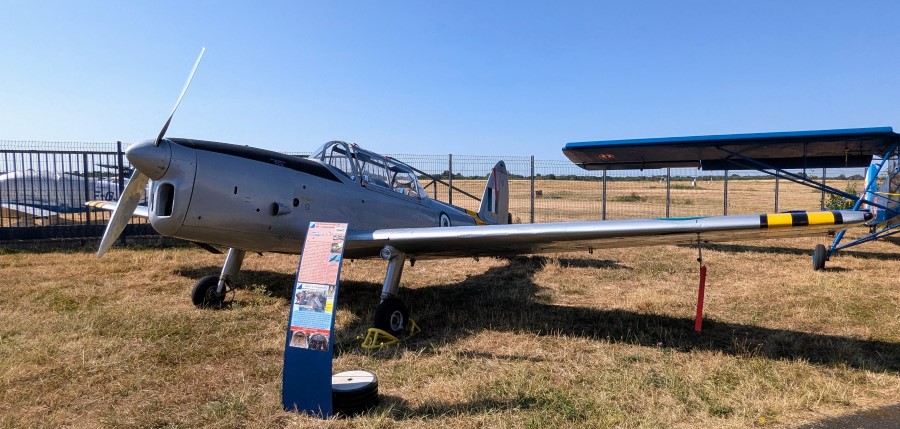
Between 1946 – 1956, 1,297 Chipmunks were built—in Canada and under license in the United Kingdom and Portugal. Easy to fly and responsive, it served in the air forces of 24 countries.
Nearly 300 aircraft remain airworthy today, including two in France. This Chipmunk was built in the United Kingdom in 1953. In 1954, it entered service with the Egyptian Royal Air Force. During the 1956 Suez Crisis, the aircraft was severely damaged. Its wreckage was restored between 1999 and 2018 (requiring 5,200 hours of work) by a British engineer, Nigel Stevens. The plane has been flying again since April 2018. Nigel Stevens donated it to the museum in 2024.
At first glance I took this to be a Fiesler Storch painted blue. It’s not.
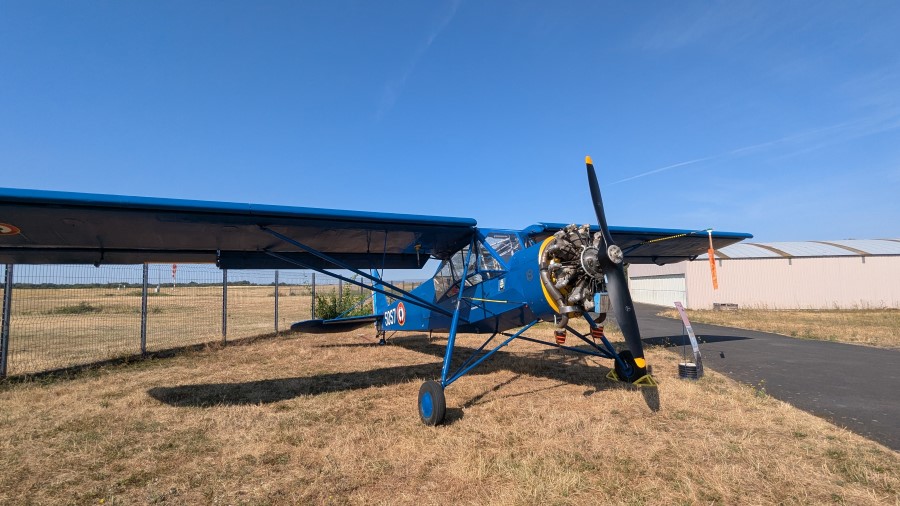
The amazing Fi-156 Storch, with its STOL capabilities (take off in under 60 metres and land in just 20 metres) was the liaison/observation workhorse of the Luftwaffe and Wehrmacht in WW2.
When France was overrun in 1940, French manufacturers were requisitioned to produce the aircraft for the Germans, which is how the Morane-Saulnier company came to build 141 Storchs. Production continued after the Liberation, with the aircraft designated MS-500, MS-501, MS-502, or MS-505 depending on the engine installed. This one is a Morane-Saulnier MS-505.
Musée Espace Air Passion Storage and Future
In addition to the museum’s main building, there is another warehouse-style building nearby with an additional 1,500 m² of reserve space, where the association houses around 200 aircraft in various states of preservation.
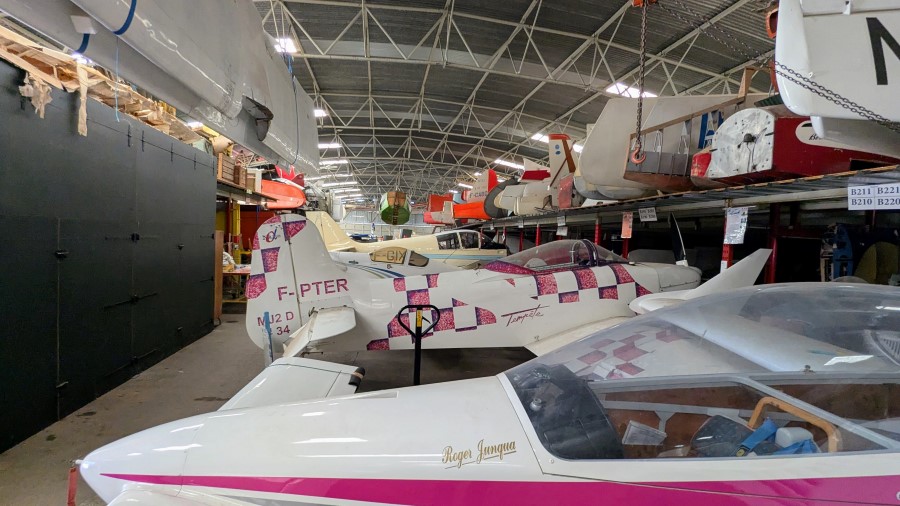
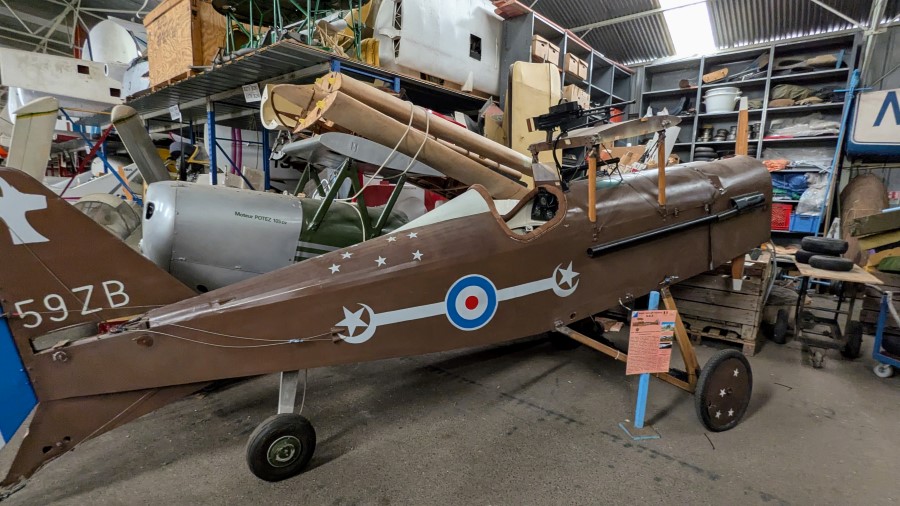
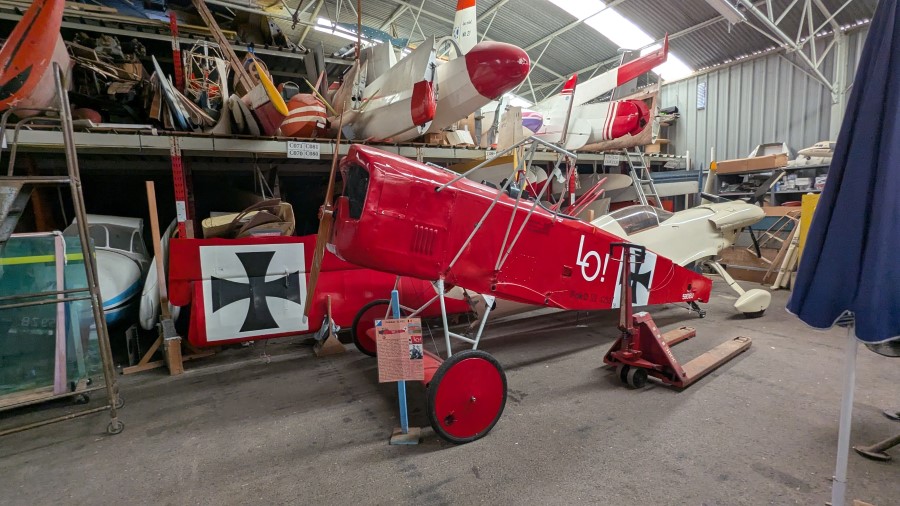
The storage warehouse is currently full, so what are the GPPA’s ambitions for the future? Francois says their next phase will be a €2 million project to construct a 1,600-square-meter woodworking workshop and expansion bay for wing assemblies and other work.
Finally…
Not everything in the collection flew or flies. This bizarre road vehicle is L’Éclair, meaning ‘a lightning flash’, not the pastry!
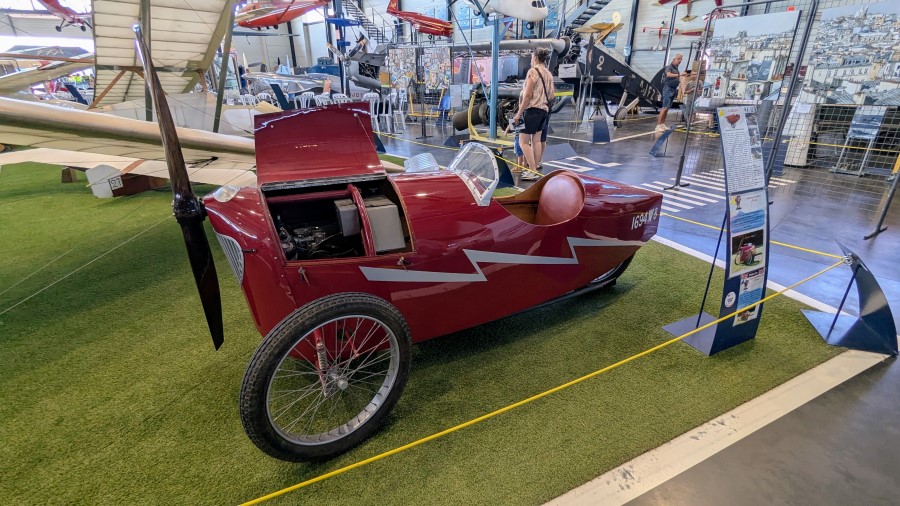
During his military service between 1920 and 1922, Jean Legeay worked as a mechanic in the fighter aviation corps. He began to get ideas about other uses for a propeller, which he put into action a few years later when he became a garage owner in Gennes (25 km SE of Angers). He started working secretly on his propeller-driven tricycle in 1926, making every part himself, except for the Indian V-twin, air-cooled; 1189cc, 8 hp engine.
It took him two years to finish and start testing it on the local roads! At 100 kph (60 mph) it was faster than anything else a motorists were astonished to be overtaken by what they took to be a very noisy airplane! In 1935, following complaints from locals who saw their chickens and dogs sliced & diced when they strayed into the road (thank God no children!), the authorities unsurprisingly banned him from using it.
L’Éclair was consigned to his attic until 2004, when his son Pierre Legeay donated it to Espace Air Passion. Later that year, a visitor, Erick de Wild from the Lane Motor Museum in Nashville (USA), was captivated by this bizarre machine in its forlorn condition. An agreement was signed between the two museums: L’Éclair would be loaned to the Lane Motor Museum, who would restore it and at the same time make a replica for themselves. It returned to France in 2017 in full running condition.
* Groupement pour la Préservation du Patrimoine Aéronautique (GPPA), created in 1981 by a group of six enthusiasts who managed to rescue the Nord 1300 glider from being burned at a barbecue. One of them, Christian Ravel, swapped it for some burnable wood and they set about restoring it.
** The museum signage suggests René Leduc built the RL-21 in the dining room of his apartment on Rue des Martyrs in Nantes and got it out through the window! I can find no corroboration for that, rather that it was built in collaboration with students and instructors at the École Technique de Nantes and with technical assistance and manufacturing support from the local Sud-Aviation aerospace plant in Saint-Nazaire.
*** You can read all about the extraordinary exploits of the Normandie-Nieman fighter group in Russia, and Lt Andre Moynet’s (Order of the Great Patriotic War, 2nd class) role in John D. Clarke’s book French Eagles, Soviet Heroes. And there is a permanent exhibition dedicated to them at the Air & Space Museum Le Bourget, which is where the group landed back in France at the end of the war. Also, out on the tarmac at Le Bourget you can see the elegant Sud-Aviation Caravelle which he helped develop (and which I flew on several times as a kid).
Declaration: I was on a self-driving research trip. My visit was organised by Destination Angers. Museum entry was complementary.
Factbox
Website:
Musée Espace Air Passion
Getting there:
Angers Loire Airport
49140 Marcé
France
There’s free parking at the site.
Entry Price (2026):
| Adult (18+) | € 8.00 | |
| Reduced rate: under 4 yr olds, students, disabled people | € 4.00 | |
| Family pass (2 adults + 2 – 4 children under 4) | € 20.00 | |
| Under 4s and aircrew in uniform – FREE | ||
Opening Hours (2026):
The museum is generally open in the afternoon on weekends in the winter and all week except Mondays in the summer.
Peak Season: April 13 to October 11
Tuesday to Sunday: 2 p.m to 6 p.m
July & August: Tuesday to Sunday 10.00 – 13.00 & 14.00 – 18.00
Off-peak Season: January 3 to April 12 and October 12 to December 31
Open Saturday and Sunday: 14.00 to 18.00
Closed on Christmas Day and New Year’s Day
Also, check their website because they are sometimes closed for special/private events.
Visiting:
The museum goes to some lengths to attract and engage with kids. They have two military aircraft from the 1950s (a Fouga Magister trainer jet and a Broussard Army utility plane) that kids (and adults) can climb aboard. They have treasure hunt/learning games, a play area for toddlers, and flight simulators for older kids.
Signage is good but in French, however they have printed guides in English & other languages.
Guided tours are also in French, but they will do a 90min tour in English for groups of 15+. Best to arrange that beforehand.