 By
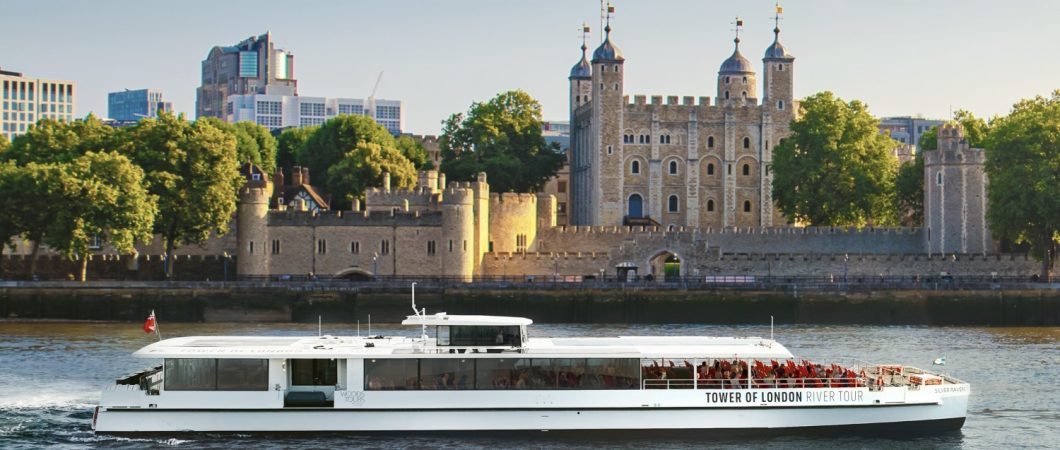
By The Silver Raven, which started operating the official 40-minute ‘Tower of London River Tours’ on the Thames in March this year, is the UK’s first electric tour boat. She is one of the new generation of river craft on an increasingly greener artery through London’s heartland.
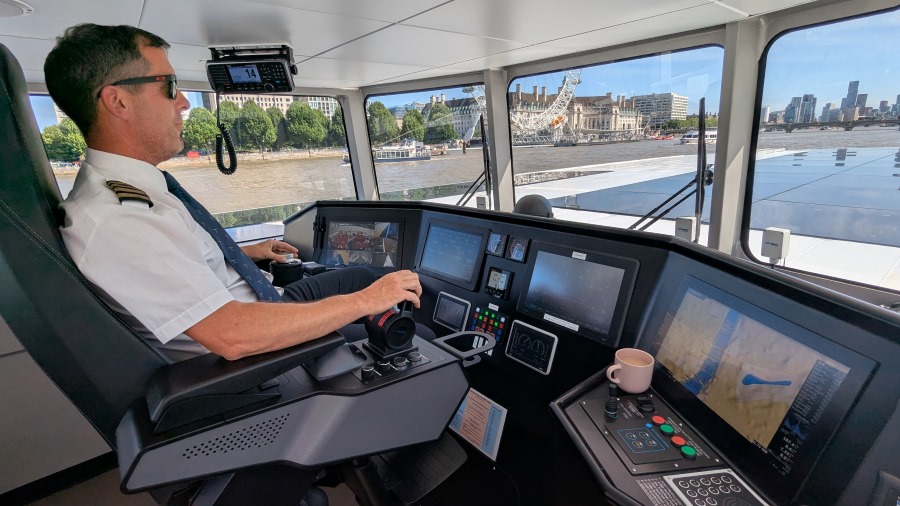
“It’s got to happen,” says her captain, Chris Manktelow. “In the next ten to twenty years, none of these petrol or diesel boats will exist” he says, gesturing at the busy river traffic ahead of us.
We’re on his bridge, talking about the – almost – steady march to sustainable river traffic on the Thames. ‘Almost’ because at the moment vessel technology is outpacing shoreside infrastructure.
Silver Raven has been designed and built to to operate fully on batteries, but she is a hybrid. She has the ability to charge her batteries from onboard generators* when charging from shore is not available. Which is sadly the case at the moment, because the charging infrastructure on the Thames at Tower Bridge Quay is not in place yet. The two megawatt shore charging facility was due to be installed by the first quarter of 2026, but it’ll be a few months yet.
She may be the first electric tour boat on the Thames but she’s not alone. Thames Clippers have been running the Uber hybrid high-speed passenger ferries since 2023, but they run on a different protocol. They operate solely on battery power while travelling through London in the Central Zone between Tower pier and Battersea Power Station pier**. Then they recharge with their onboard generators while outside the zone. Overall it gives them an emissions reduction of 16.5% when compared with running on biofuel alone throughout all parts of the route. And of course the disadvantage is, there’s a restriction on route flexibility; each ferry has to cover the outer zones to recharge.
The difference is that Silver Raven‘s 720 kW EST-Floattech Octopus Series battery bank is specifically engineered for rapid charging from a high power shore installation. Not that she uses much power. Chief Engineer Krzysztof Bielsid says that running their 40-minute tour route at a healthy 8 knots barely uses 6-7% of their battery capacity. It means they can run their usual 6 tours a day and only need to top up once.
And there’s plenty of power in hand. Capt Chris demonstrates by briefly nudging the throttles forward, and immediately you can feel the lightweight (89 ton) aluminium boat surge quietly ahead.
What else is special about Silver Raven?
Well, the owners & designers are the Woods family – five generations of licensed Watermen to the King. They have built and crewed sightseeing vessels on the River Thames for over a hundred years, and Chris Kangis, the CEO of Woods Tours, says that this project marks a step-change from the past: “The Silver Raven is the product of years of development. It showcases the strength of British shipbuilding and innovation, offering a quiet, clean and beautiful way to experience the Thames. It is the future of river tourism.”
The British shipbuilding he refers to is the superyacht builder, Pendennis Shipyard in Cornwall, who saw the project as an opportunity to expand their skills with electric propulsion and open a new commercial product line at the same time.
Toby Allies, Managing Director at Pendennis said the build had been an exciting period for the yard. The aluminium construction specified on the project was all built in-house, providing a perfect opportunity for some of their more experienced team members to transfer their skills and knowledge to a whole new generation of apprentice fabricators.
of London River Tour)
And “the requirement for the vessel to be fully battery-powered advanced our own in-house capabilities in this area that in turn will transfer to other market sectors that we operate in,” he added.
Theirs was not the only ‘local’ input.
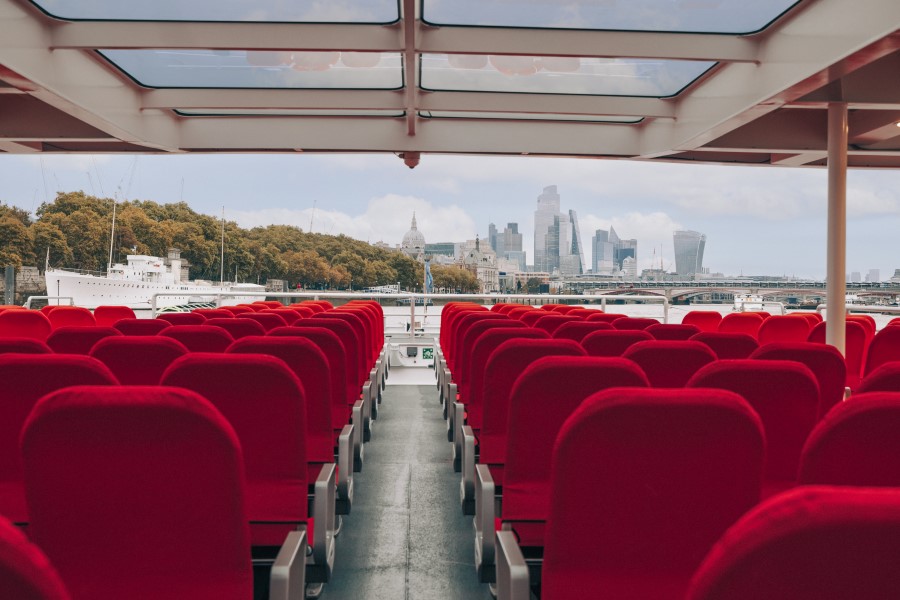
The interiors of the new 250 passenger boat were designed by Design and Development Director Kate Woods and feature…
- bespoke House of Hackney Axminster carpet woven in Devon
- red eco-leather seating crafted in Scotland
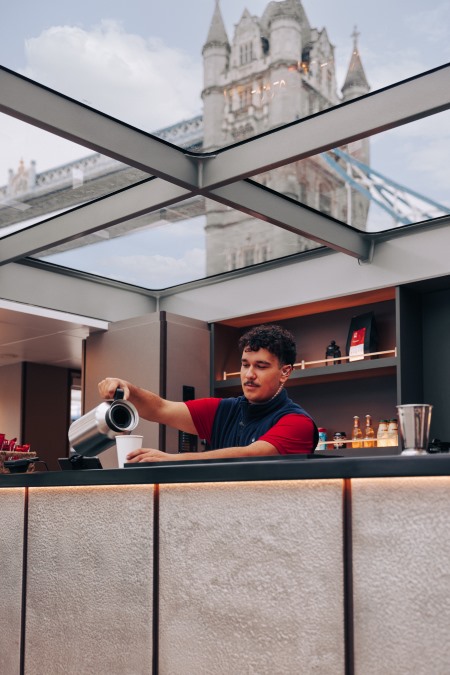
- and a hammered English pewter bar, made in Birmingham
And The Tower of London River Tour itself?
The official Tower of London River Tour is operated by Woods Tours in partnership with Historic Royal Palaces, the independent charity that cares for the Tower of London. It can be booked independently or as a joint ticket including a visit to the Tower.
It is a 40-min circular tour that runs upstream to the Houses of Parliament at Westminster, before returning to Tower Bridge Quay.
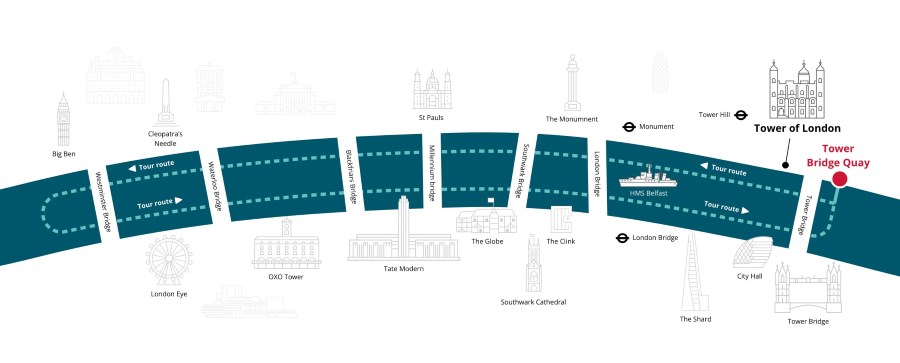
Guests can sit inside with panoramic views of the river, or outside on the awning-shaded deck, or at the stern in the bar area, and the Silver Raven is designed to be fully accessible throughout.***
The tour is guided by a live narrator working from a historically detailed and humorous script created in collaboration with Historic Royal Palaces and written by Martha Howe-Douglas, co-creator of BBC’s Ghosts. It brings more than 1,000 years of history accurately to life as passengers journey past twenty of London’s most famous landmarks.
Declaration: I was on a complimentary press visit.
* Fuelled by Shell GTL (Gas-to-Liquids) fuel manufactured from natural gas rather than crude oil. GTL contains almost no sulphur, metals, or aromatic hydrocarbons, producing significantly fewer toxic chemicals than standard ULSD (Ultra Low Sulphur Diesel). Also, unlike pure biodiesel, which improves carbon metrics but increases smog-forming NOₓ emissions, GTL simultaneously lowers both particulate matter and NOₓ. (Unlike sulphur, which is trapped inside the fuel itself, NOₓ is created by the heat of combustion.)
** Their outer zones extend eastward to Royal Wharf near the Thames Barrier, and westward to Putney pier next to Putney bridge.
*** Accessibility experts Nimbus were consultants on the project. Their role was to ensure the experience is as accessible as possible for all ages, abilities and backgrounds.