 By
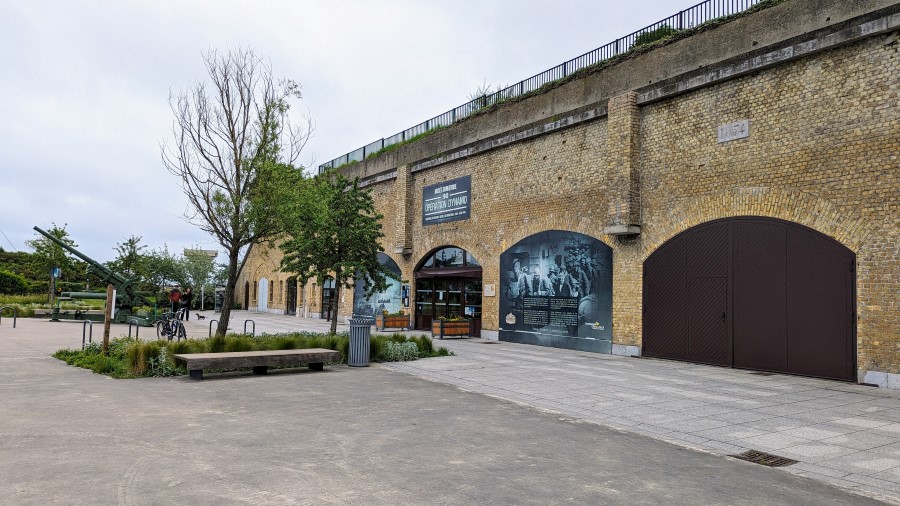
By Operation Dynamo was the name given to the hurried extraction of the British Expeditionary Force (BEF), plus allies (mostly French), from the beach at Dunkirk (Dunkerque) in May/June 1940. The Musée Dunkerque 1940 is located in Bastion 32, the headquarters for the French and Allied forces during the Battle of Dunkirk and Operation Dynamo.
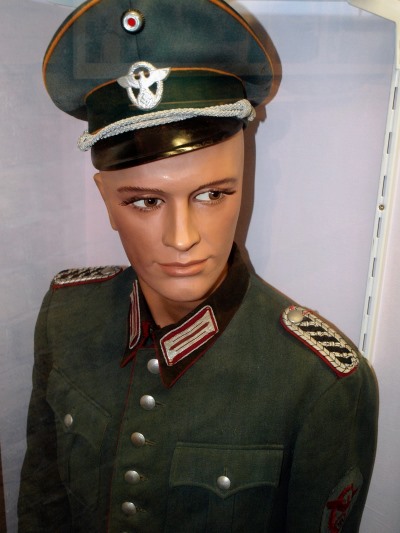
This was a return visit for me. I was last here over a decade ago. Little has changed although there is now much better use of space, some new exhibits, and a general increase in quality. I remember being struck by how effeminate the German officers were, because back then the museum was apparently short of male mannequins to put uniforms on!
The Dynamo Museum is not huge. It occupies the casemates or tunnel arches (like railway arches) built into one of the curtain walls of the Séré de Rivières* fortress which was built in the 1870s to guard the port. Being close to the East Mole and the evacuation beaches, it served as the command post for Admiral Abrial (commander of the French Northern Maritime Forces) and General Fagalde, responsible for the defence of Dunkirk.
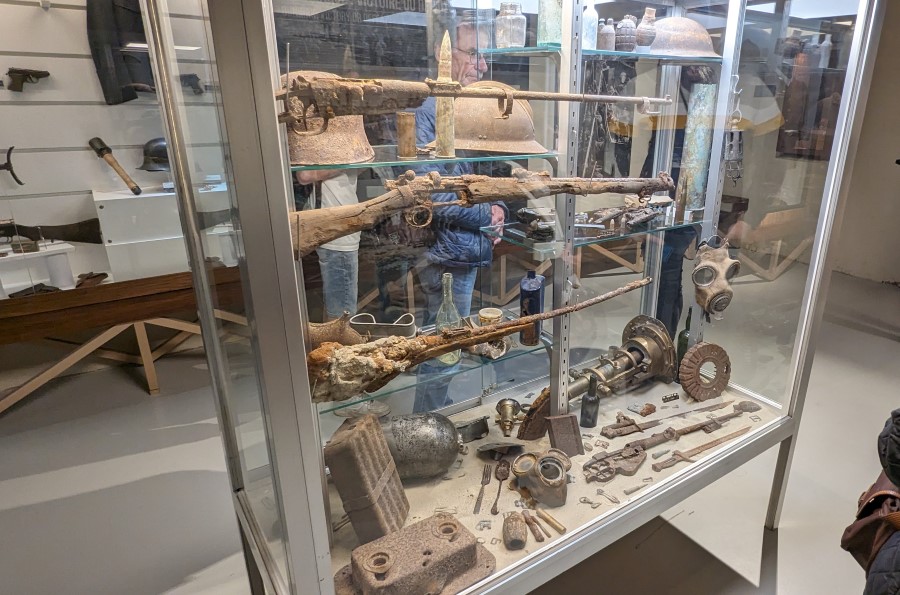
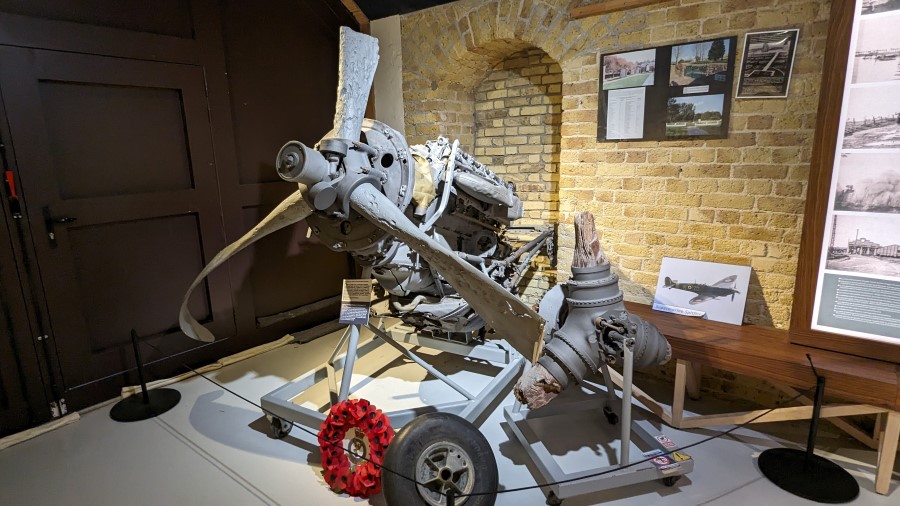
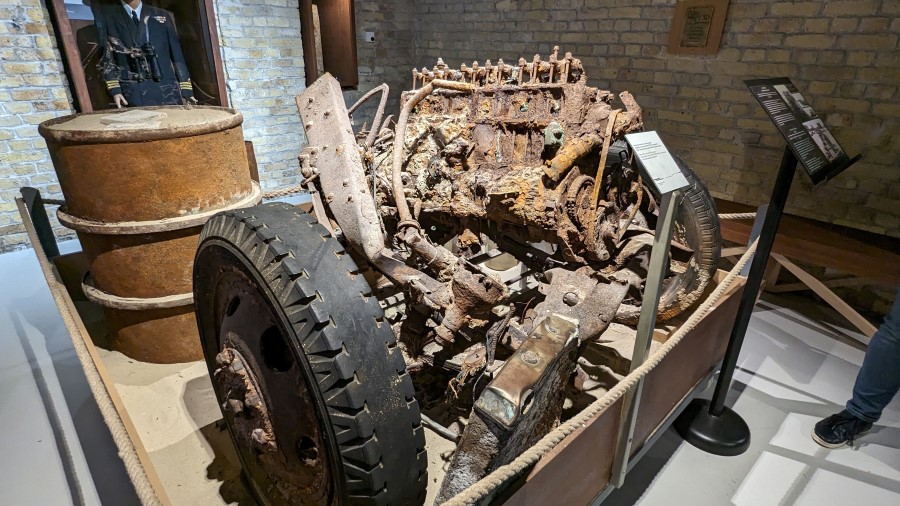
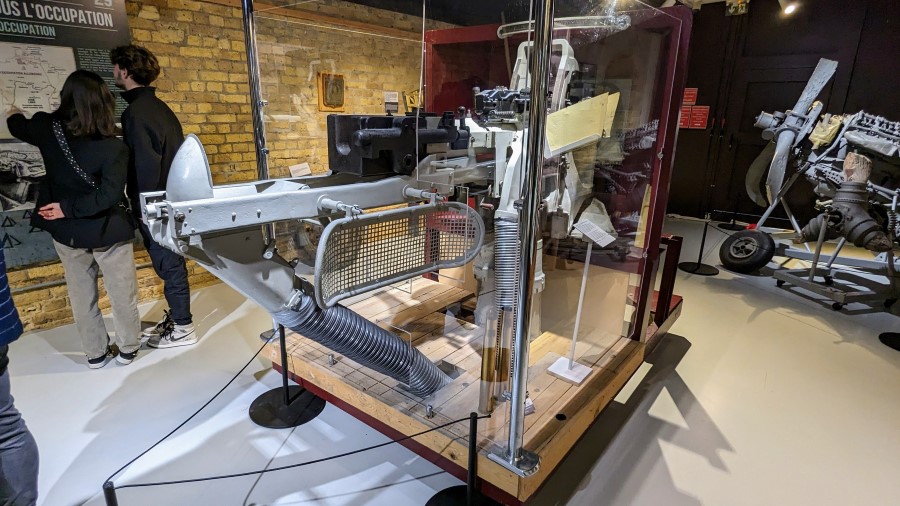
Now it contains artefacts found mostly in the port, on the beach, in the dunes, or in the sea, including vehicles and weapons from handguns and rifles to machine guns and artillery pieces.
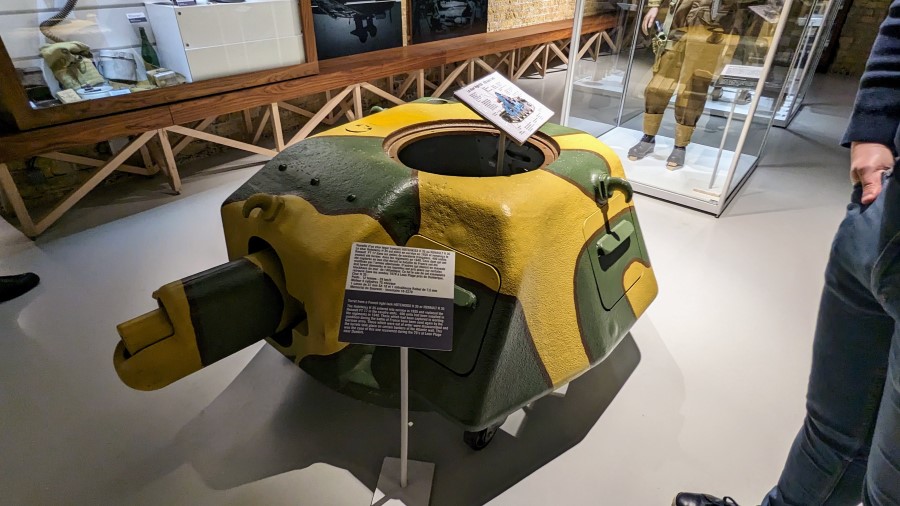
The Germans repurposed a lot of equipment taken from their captured countries, to be used in their ‘Atlantic Wall’. Taking tank turrets from damaged enemy tanks and placing them on concrete bunkers was not unusual. This is the turret from a French Hotchkiss/Renault 35 light tank, relocated to a bunker on the Loon Plage beach at Dunkirk. You can see another example at the Utah Beach D-Day Museum in Normandy where a Renault FT 37mm turret was mounted on a concrete ‘Tobruk’.
I remember taking a photo of this (below) the last time I visited.
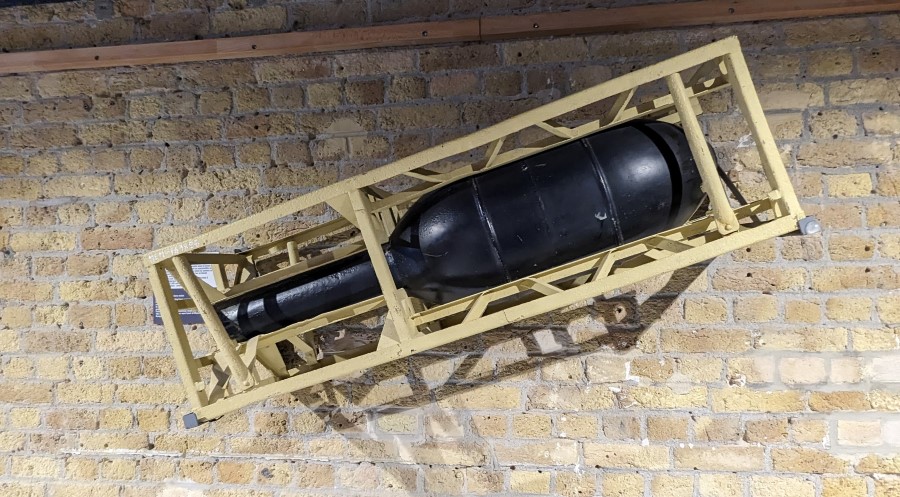
It’s a 32 cm rocket, called a ‘Nebelwerfer’ which means “Smoke Mortar”; a German deception because, far from being benign they were usually packed with high explosive! The Allies, on the receiving end, called them “Moaning Minnies” or “Screaming Mimis” because of the high-pitched screaming noise they made as they flew through the air. They were designed to be fired as artillery from a multiple rocket launcher on a trailer, but, as here, they could also be fired from their packing cases which could be welded onto the sides of a Sd.Kfz. 251/1 half-track armoured personnel carrier, making them very mobile on the frontline.
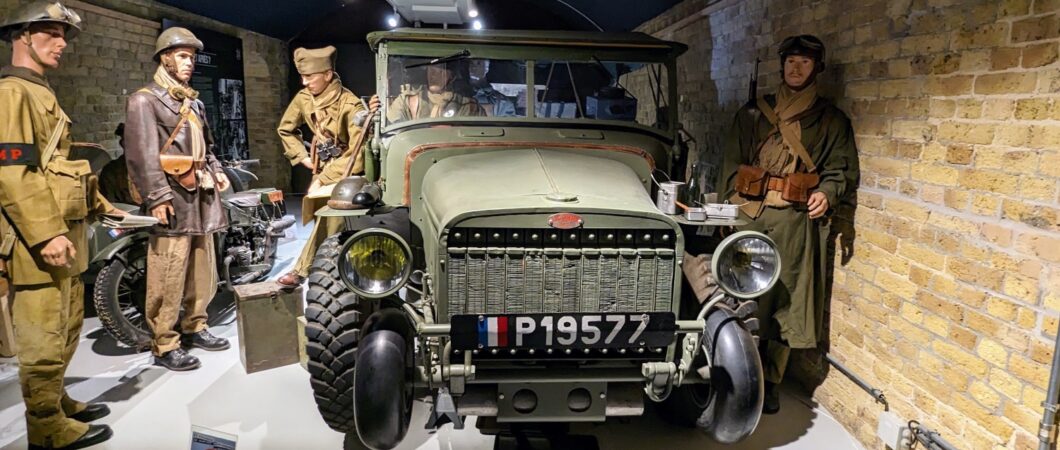
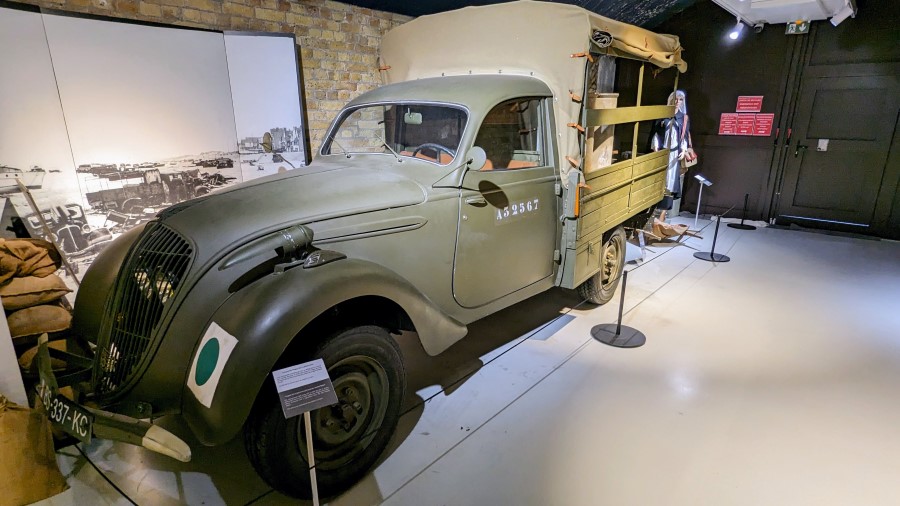
The museum has a few restored or replica vehicles, like the rather elegant Peugeot 202 light truck, which was a French Army transport vehicle based in Lille in 1939… and more recently was restored for a movie.
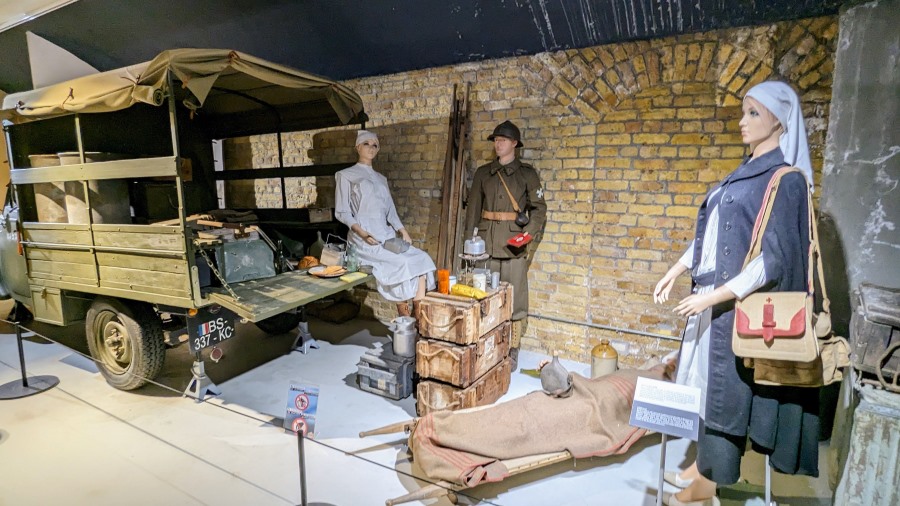
They’ve also got themselves a Laffly V15T. I’ve always rather liked the Laffly with its very practical nose wheels for getting up steep embankments. There’s one at the French national tank museum in Saumur.
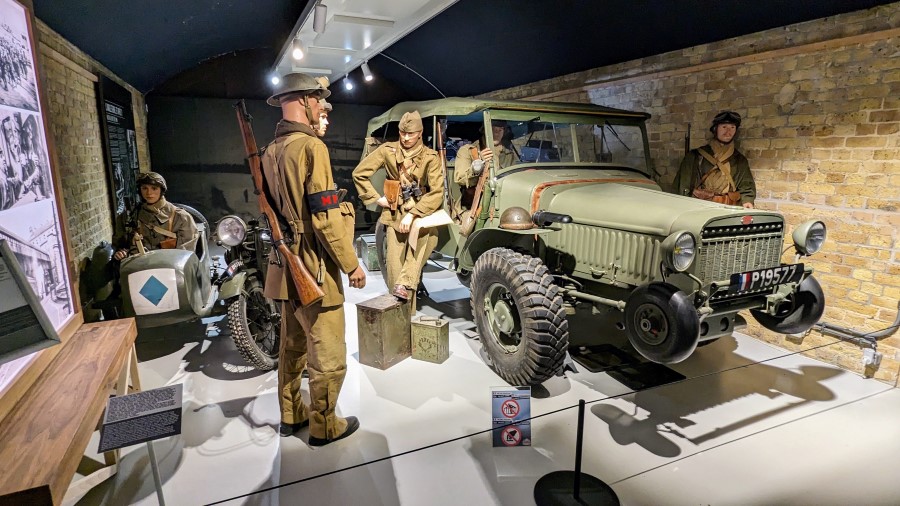
And next to it, a Gnome et Rhône AX2 military motorcycle-sidecar combo. The Germans & Russians weren’t the only ones to use motorcycle-sidecars. Gnome et Rhône were principally aircraft engine manufacturers, but in 1936 the French Army commissioned them to mass-produce motorcycle combos, which they did until the end of the war**. They were rugged and reliable and were particularly useful because the sidecar wheel could also be engaged to the transmission with the pull of a lever; handy in mud or snow! This one, fitted with a Mle 1924/29 machine gun, was assigned to the Dragon Cavalry Regiment.
There are also uniforms on display with memorabilia from those involved in the 9-day evacuation under siege, such as helmets, identity tags, water bottles, and documents.
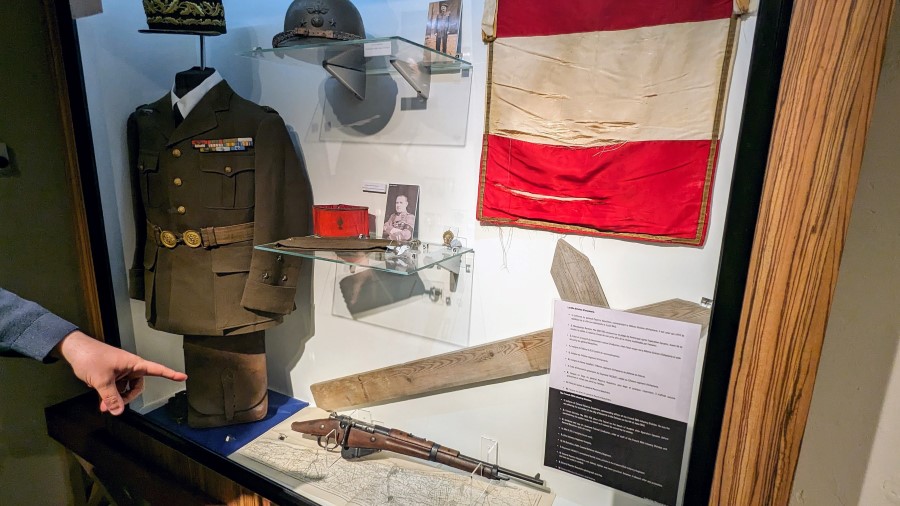
This display case has the uniform of General Maurice Beaufrère, Commanding officer of the French 68th Infantry Division, and some of his, and his officer’s, personal effects. It was Gen. Beaufrère who surrendered the city of Dunkirk to the Germans on 04 June 1940. The gun is interesting. It is a French Berthier Mle 1892 M16 short rifle, found on the beach. Many soldiers deliberately broke the stocks of their rifles before surrendering, to render them useless to the enemy.
It wasn’t just soldiers caught up in the fighting. Civilians too were trying to evacuate, or just stay alive under the bombardment.
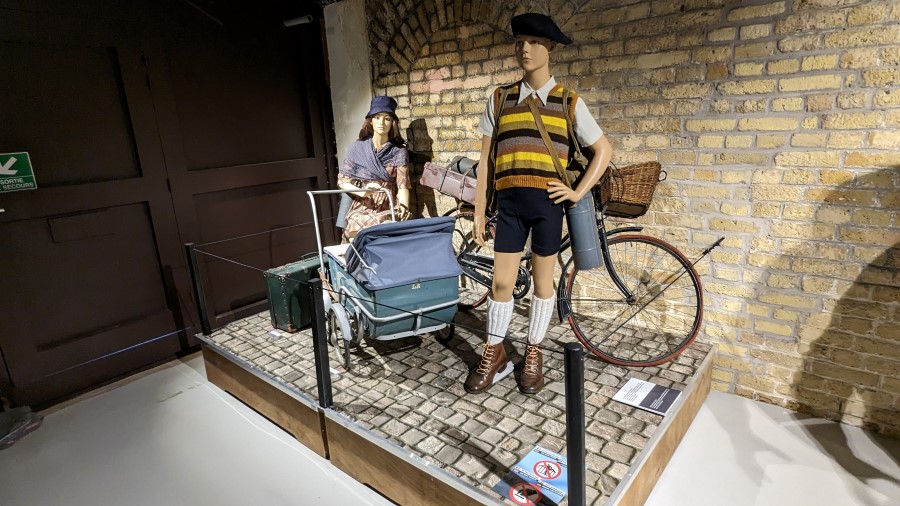
The bicycle here, made by the French ‘Wonder Cycle’ company of St. Etienne, was actually used during the exodus in May 1940. It has a 1940’s tax plate on the frame, and is carrying a cardboard suitcase, a gas mask case, and a food basket. The boy with hand on hip, reminds me a little of the museum’s former German officer!
The museum takes care to explain the events surrounding the extraordinary evacuation with oral testimonies from veterans and local residents, historic photographs, information panels and models.
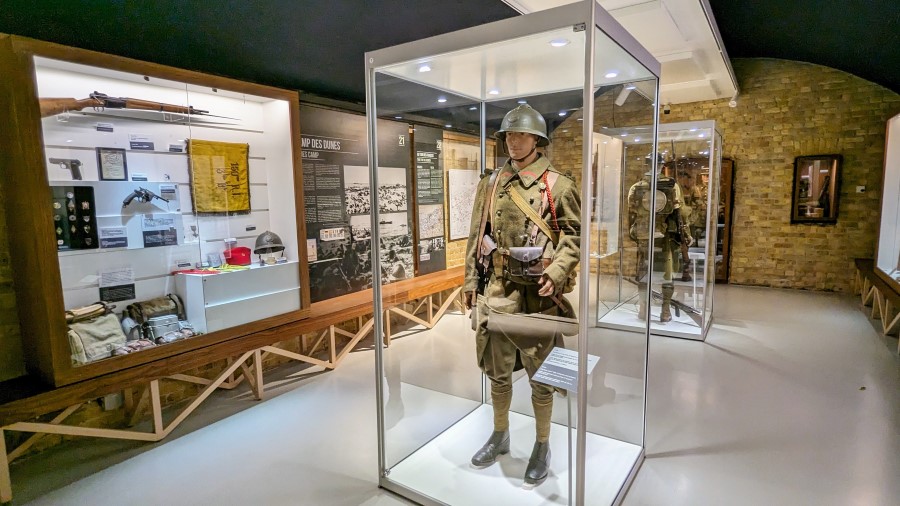
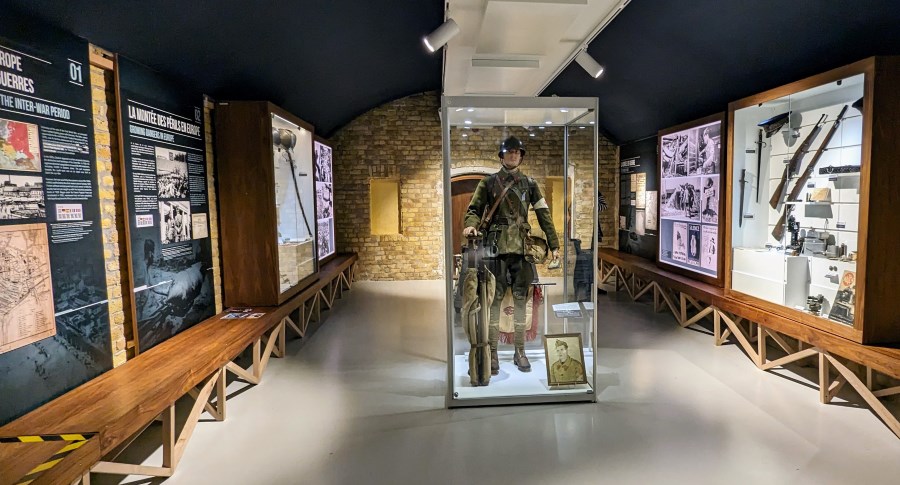
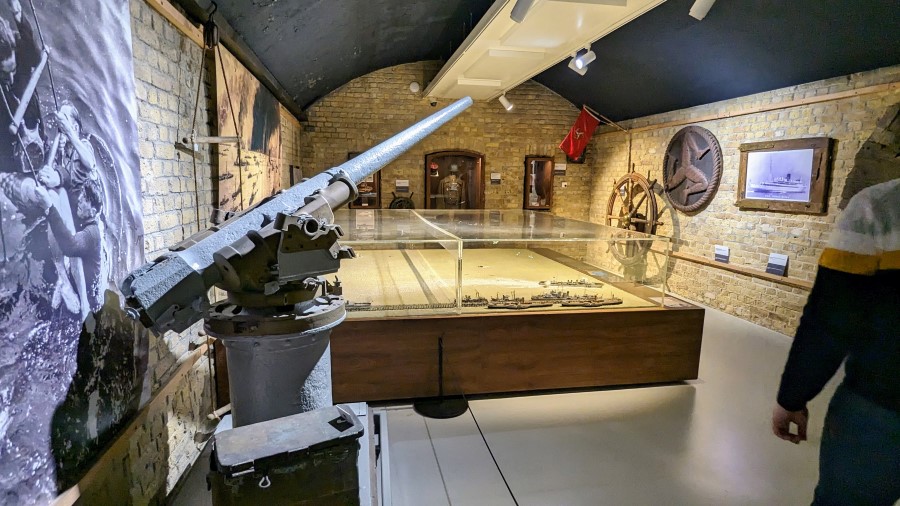
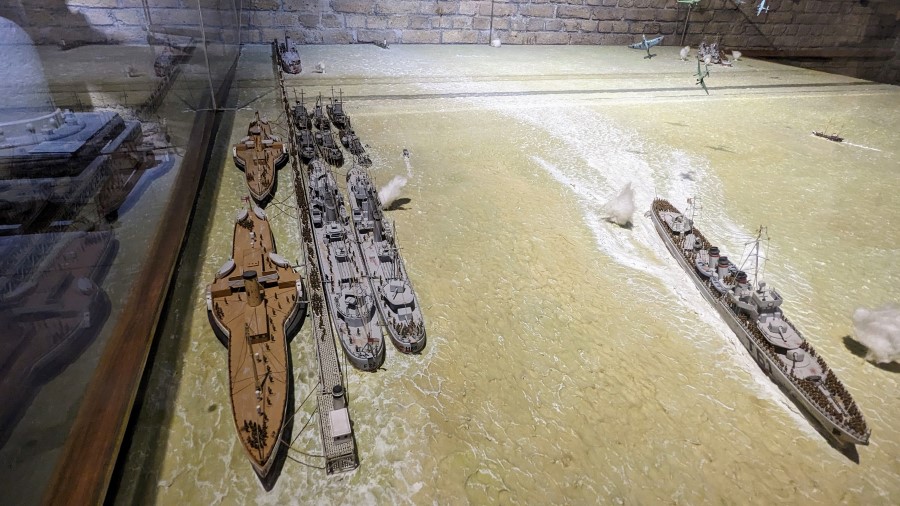
But not everything in the museum is focused on the events of May/June 1940.
I assumed this splendid model of a French destroyer, Le Triomphant was on display because she was one of the ships bombed, sunk, or otherwise mixed up in the evacuation. Not at all. It turns out she was simply built in Dunkirk in 1935.
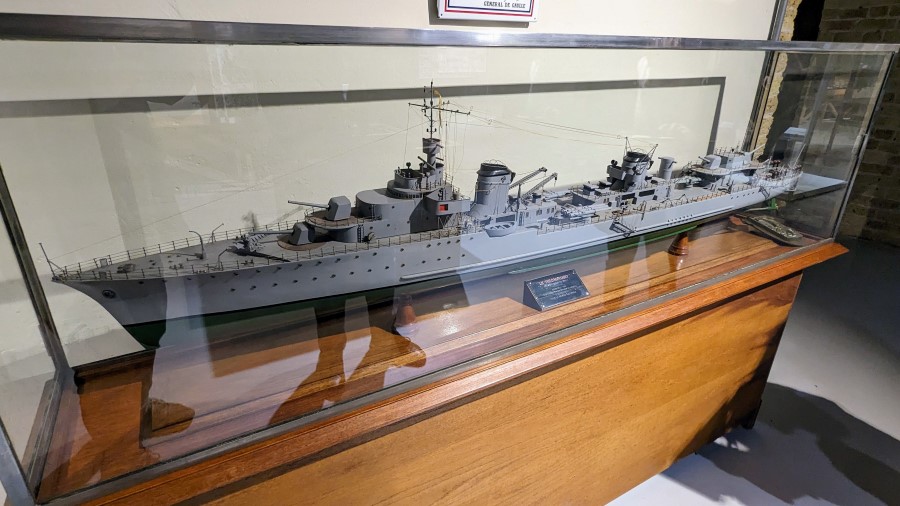
After the invasion of France she escaped to England and then spent most of her time operating with the Americans as a Free French destroyer in the Pacific. She survived the war and was eventually scrapped in 1957.
And, one set of info panels covers the liberation of Dunkirk. Unlike the Hitler-ordered (“fight to the last man”) fortress ports of Calais and Boulogne, Dunkirk actually held out to the end of the war. The German commander, Rear-Admiral Frisius, finally surrendered to General Liska’s Czechoslovakian brigade on 9 May 1945 – the day after VE Day!
* See also Fort des Dunes nearby.
** After the fall of France the Germans kept Gnome et Rhône producing AX2s. By the end of the war pretty much every army, Allied and Axis, had Gnome et Rhône bikes!
Declaration: I was on a private press trip as a guest of the Pas de Calais tourist office. Museum entry was complementary.
Factbox (2026)
Website:
Musée Dunkerque 1940
(Strangely in this day and age, their website is not secured with an https protocol, nor are there cookie options. There is no English language version, but look for the orange ‘Translate’ button which works well.)
Getting there:
Musée Dunkerque 1940
Courtines du Bastion 32
Rue des Chantiers de France
59140 Dunkerque
France
The museum is close to the beaches on the NE side of town. It’s well-signposted and easy to find.
DFDS operate ferries between Dover – Dunkirk, though to be fair, their terminal is nearer Gravelines than Dunkirk. It’s a 19km/25min drive from the ferry terminal to the museum.
Entry Price:
| Individual | Group (10+) | |
|---|---|---|
| Adult | € 8.00 * | € 7.00 each |
| Concessions ** | € 6.00 | € 3.00 each |
| Child (under 12) | Free | – |
* Or € 15.00 for a couple.
** Reduced rate for young adults aged 12 -18, students, veterans, disabled and school/academic groups.
There are also combined saver tickets with Fort des Dunes or the Dunkirk Maritime & Port Museum. Both cost €10.00.
Opening Hours:
The museum is open daily 10.00 – 18.00 (last entry 17.00), except on 24, 25, 31 December and 1st January, 2027.
Then the Annual Closure (“Fermeture”) is from 4 January to 5 February, 2027.