 By
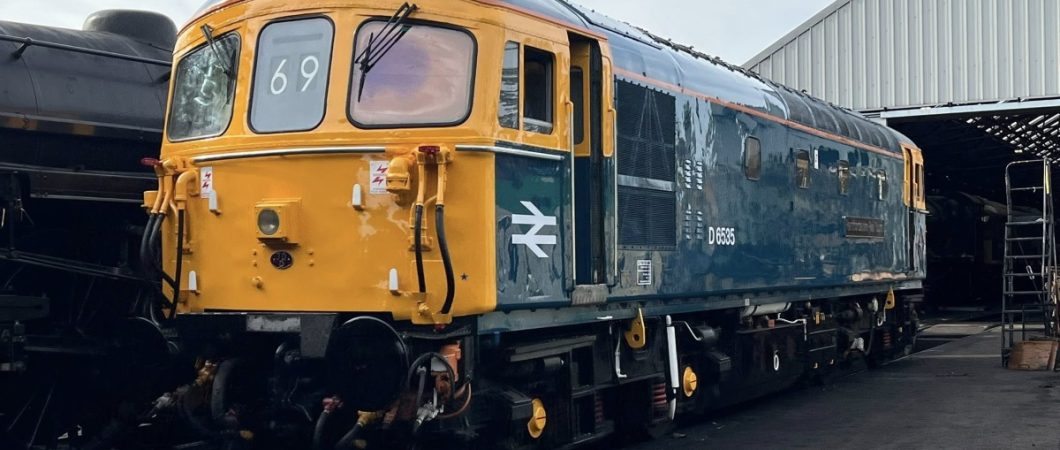
By The Great Central Railway and 5305 Locomotive Trust are celebrating the completion of a major restoration project on the National Railway Museum’s National Collection Class 33 locomotive D6535 – one of Britain’s most significant early diesel locomotives.
Visitors will have the opportunity to see the restored locomotive in action during Great Central Railway‘s Autumn Diesel Gala (3-6 Sep 2026), where D6535 will be paired with visiting Class 33 locomotive 33103, appearing courtesy of Nemesis Rail and the Ecclesbourne Valley Railway. The pairing promises to be a highlight for diesel enthusiasts, although D6535 is also expected to operate on selected running days before the gala.
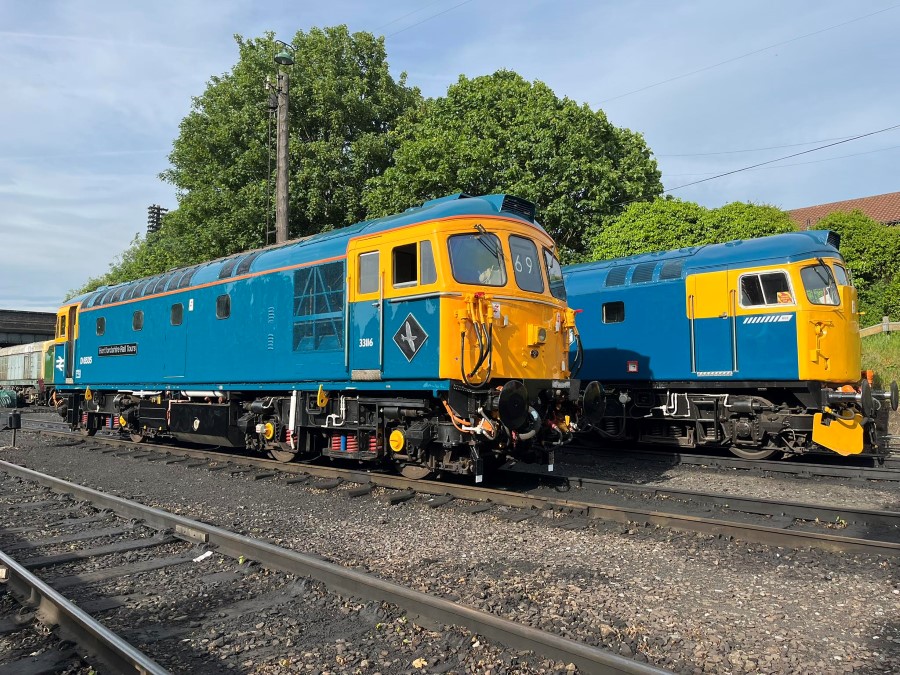
Built in 1960 for BR Southern Region, D6535 was an enhanced locomotive with a more powerful Sulzer engine, electric train heating, and both air and vacuum braking systems.
The class became particularly well known for innovative push-pull operations on services between Bournemouth and Weymouth. Modified locomotives could haul trains in one direction before being remotely controlled from the driver’s cab of an electric multiple unit on the return journey.
D6535 was withdrawn from service in 1998 and was selected by the Railway Heritage Committee for preservation within the National Collection.
After spending several years stored at Old Oak Common, where exposure to the elements led to significant deterioration, D6535 moved to the Great Central Railway in 2005 under the custodianship of the 5305 Locomotive Trust. While initial restoration efforts included partial rewiring, engine repairs and bodywork attention, extensive corrosion caused by prolonged outdoor storage required a far more comprehensive programme of restoration.
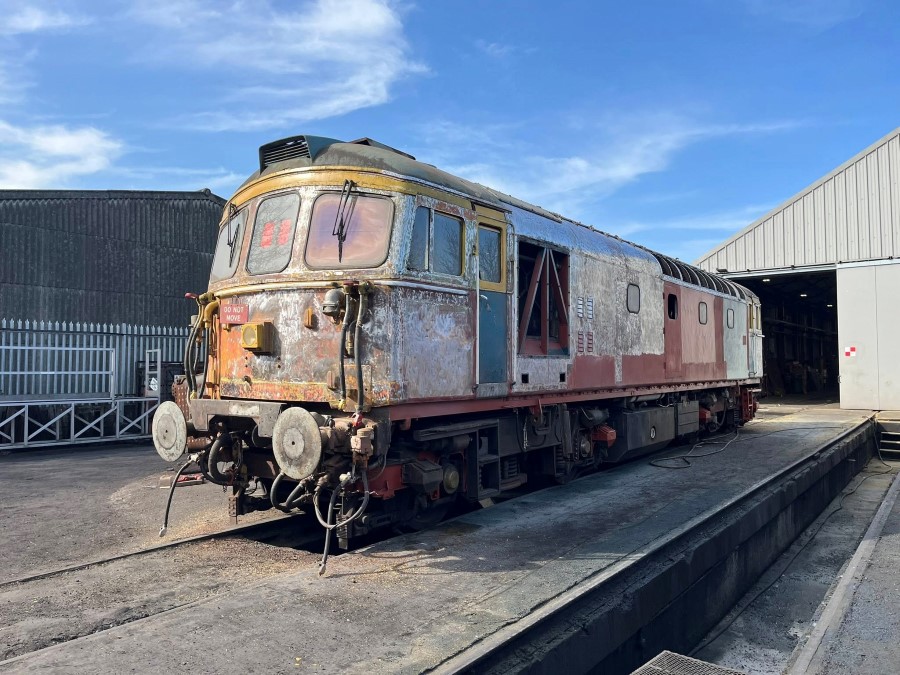
The latest project has included substantial structural repairs, replacement of heavily corroded metalwork, and extensive work to both driving cabs. Restoration teams also addressed long-standing issues caused by failed internal guttering and water-trapping body filler, which had contributed to widespread deterioration.
The completed restoration ensures that D6535 can continue to tell the story of Britain’s transition from steam to diesel traction and preserves an important chapter in the history of the Southern Region’s diesel fleet.