 By
By This is a neat piece of civil engineering.
If you take the Soroksári út road into the centre of Budapest each day, you’ll know how busy it is. The Ferencváros – Kelenföld S-bahn railway line, which crosses over the road near the Közvágóhíd tram stop, needs expanding. It’s a major infrastructure project that means extra tracks and a new bridge at Közvágóhíd.
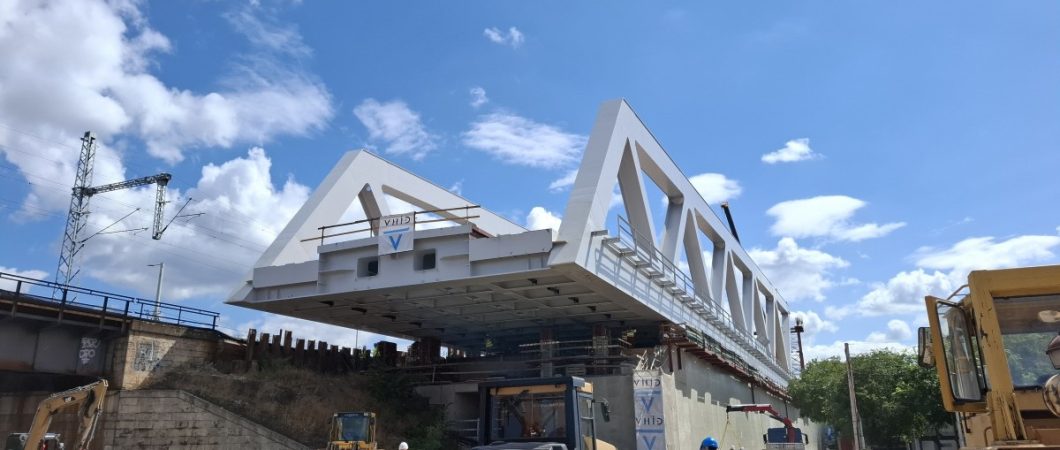
A Hungarian construction company, V-HID, has been given the job, which involves installing two 108m spans each weighing 2,200 tons. The usual process involves building the bridge spans on site and then ‘skidding’ them into place. It’s a quick way to install bridge sections, but it still takes a while to construct the necessary support towers in the road, which need 20 metre piles dug into the ground before skidding the bridge over them.
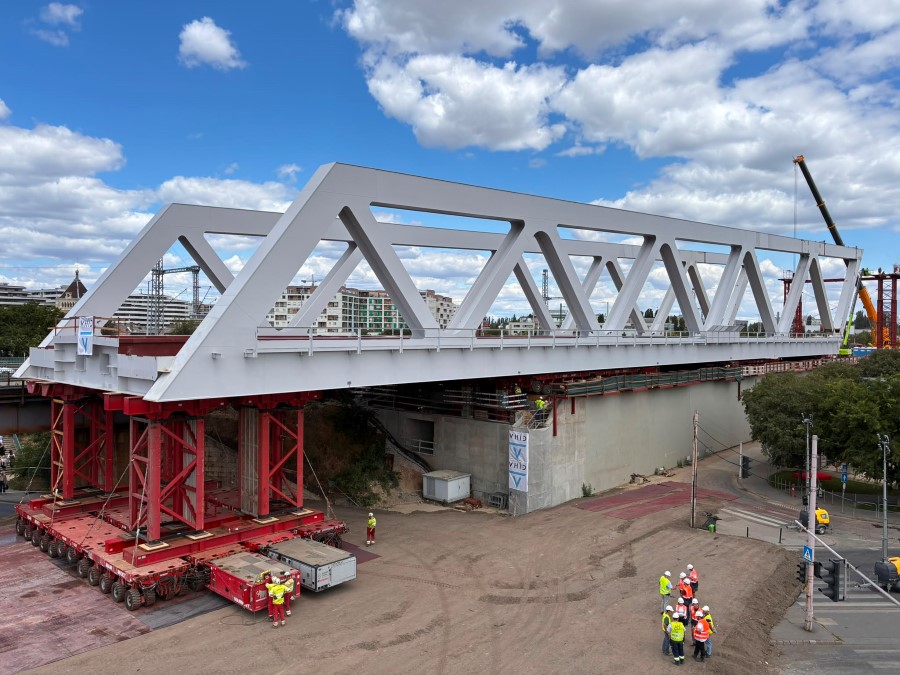
Closing this road for months or even weeks wasn’t an option, so they brought in Mammoet, the crane company or ‘heavy lift specialists’ as I’m sure they would prefer to be described. It was Mammoet who told me about this.
Their specialist Self-Propelled Modular Transporters (SPMTs) enable ‘skidded’ bridge sections to be installed in just a few days, or even hours.
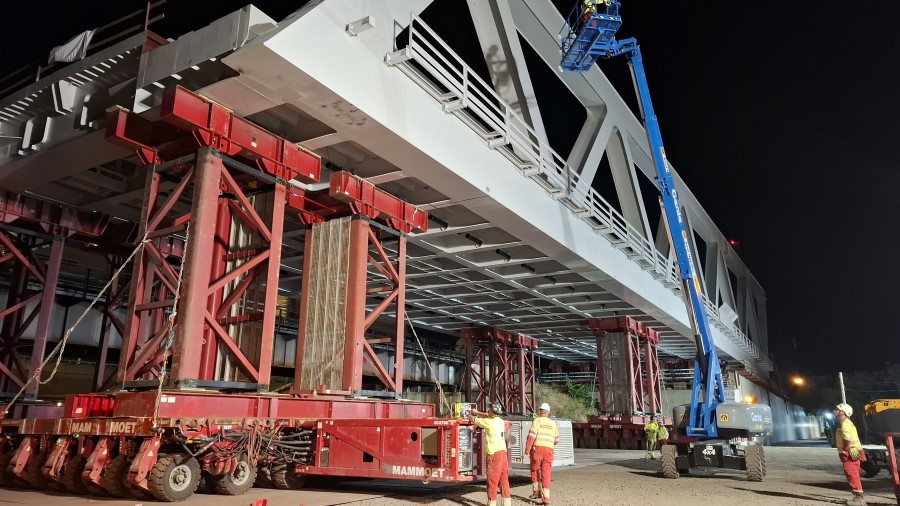
In this case four sets of SPMTs were used for the operation; working at two levels – upper and ground – to launch and support the weight of the bridge in rotation. The bridge was driven forward until it was cantilevered, then the first set of SPMTs drove underneath it with its support masts. As the tail end upper SPMT was released from its load, it was transferred down to the road, had its support mast installed and took up the next part of the load.
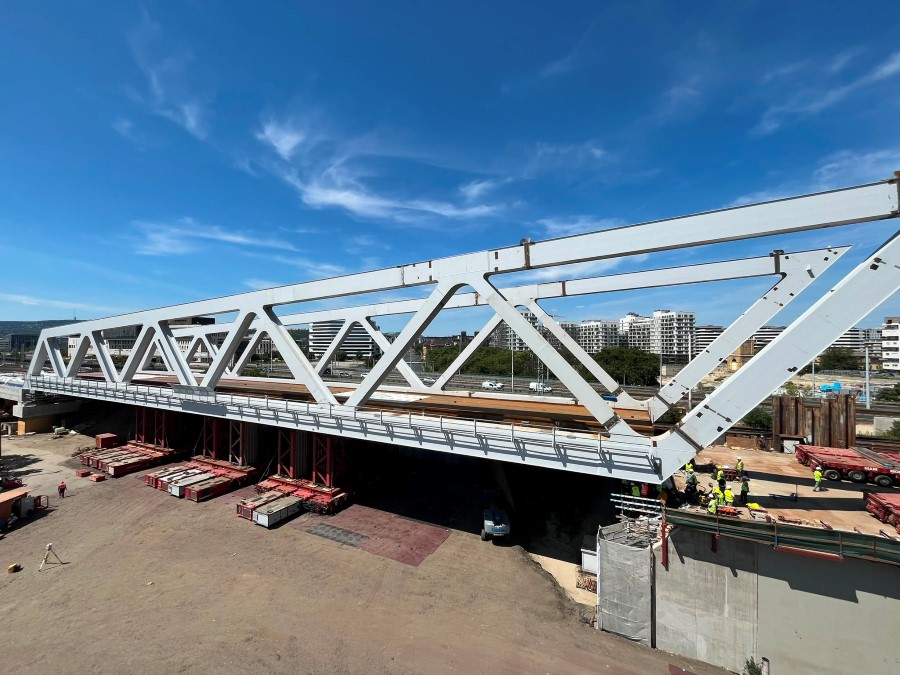
As a result, the obstruction of this main artery was reduced to a single weekend in July, starting Friday morning and then reopening before rush hour on Monday morning.
The same process will apply to the second section when its ready.